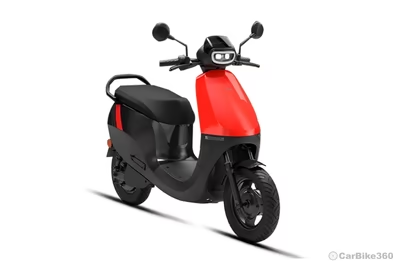
इलेक्ट्रिक स्कूटर
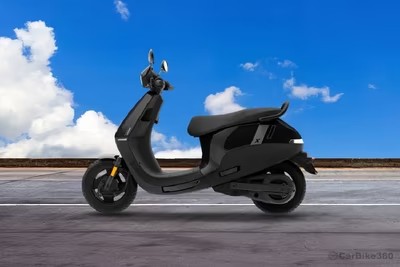
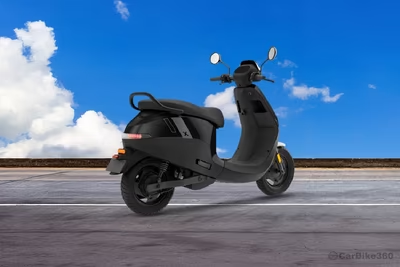
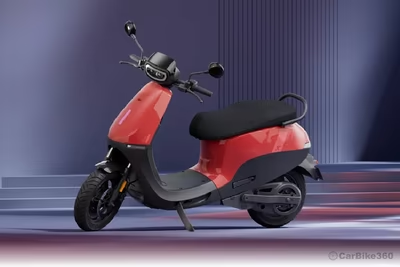
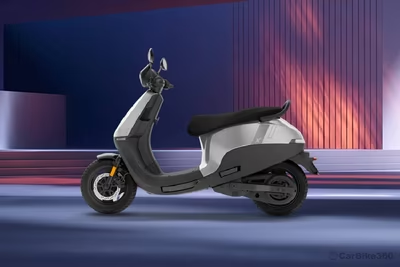
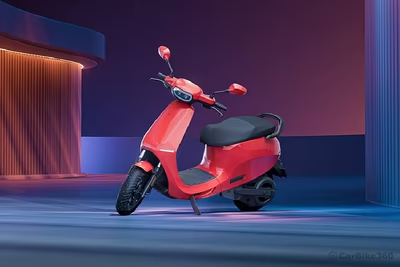
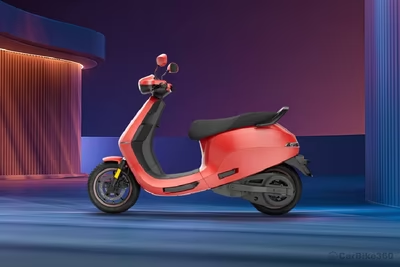
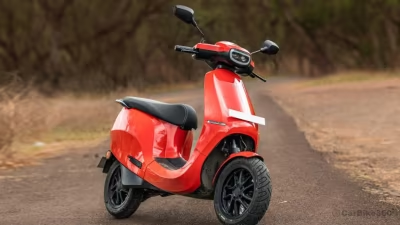
ओला इलेक्ट्रिक स्कूटर
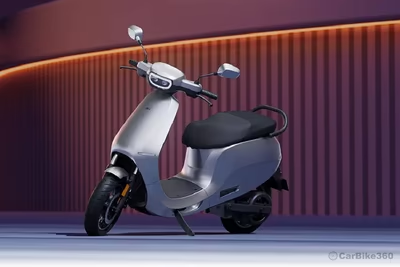
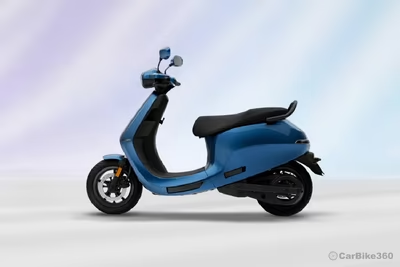
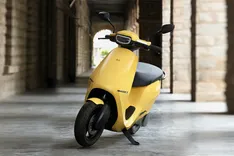
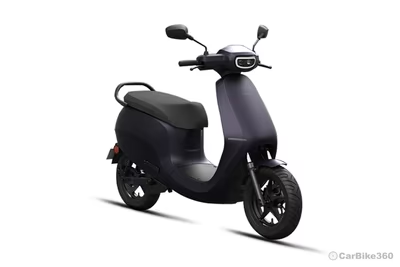
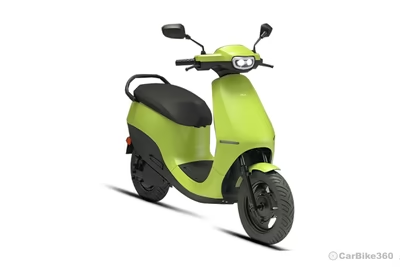
ओला इलेक्ट्रिक स्कूटर की कीमत ₹55.75 हज़ार से शुरू होती है, जो सबसे किफायती मॉडल ओला इलेक्ट्रिक एस1 जेड है। सबसे महंगा मॉडल ओला इलेक्ट्रिक एस1 प्रो प्लस है, जिसकी कीमत ₹1.60 लाख से शुरू होती है।
ओला इलेक्ट्रिक भारत में 5 स्कूटर मॉडल पेश करता है, जिनमें स्कूटर श्रेणी में 5 स्कूटर्स शामिल हैं।
ओला इलेक्ट्रिक की भारत में 3 आने वाली स्कूटर्स हैं, जो हैं ।
ओला इलेक्ट्रिक स्कूटर प्राइस लिस्ट (जुलाई 2026) भारत में
ओला इलेक्ट्रिक स्कूटर की कीमत ₹55.75 हज़ार से शुरू होती है और ₹1.60 लाख तक जाती है। टॉप 5 लोकप्रिय ओला इलेक्ट्रिक स्कूटर्स की कीमतें इस प्रकार हैं: ओला इलेक्ट्रिक एस1 जेड की कीमत ₹55.75 हज़ार है, ओला इलेक्ट्रिक एस1 एक्स की कीमत ₹90 हज़ार है, ओला इलेक्ट्रिक एस1 एक्स प्लस की कीमत ₹1.10 लाख है, ओला इलेक्ट्रिक एस1 प्रो की कीमत ₹1.15 लाख है, ओला इलेक्ट्रिक एस1 प्रो प्लस की कीमत ₹1.60 लाख है।
| मॉडल | कीमत |
|---|---|
| ओला इलेक्ट्रिक एस1 जेड | ₹55.75 हज़ार |
| ओला इलेक्ट्रिक एस1 एक्स | ₹90 हज़ार |
| ओला इलेक्ट्रिक एस1 एक्स प्लस | ₹1.10 लाख |
| ओला इलेक्ट्रिक एस1 प्रो | ₹1.15 लाख |
| ओला इलेक्ट्रिक एस1 प्रो प्लस | ₹1.60 लाख |

ओला इलेक्ट्रिक स्कूटर्स की भारत में कीमत


- ✓ विशाल फ़्लोरबोर्ड व्यावहारिकता में सुधार करता है
- ✓ कनेक्टेड फीचर्स रोजमर्रा की सुविधा को बढ़ाते हैं
- ✓ स्वैपेबल बैटरी सेटअप डाउनटाइम को कम करता है
- ✓ डुअल रिमूवेबल बैटरी चार्जिंग फ्लेक्सिबिलिटी प्रदान करती हैं

- ✓ कई बैटरी विकल्प विभिन्न आवश्यकताओं के अनुरूप हैं
- ✓ स्मार्ट डिस्प्ले कनेक्टेड राइडिंग अनुभव को सक्षम बनाता है
- ✓ चिकनी इलेक्ट्रिक मोटर मूक आवागमन सुनिश्चित करती है
- ✓ हल्के डिजाइन से शहर की गतिशीलता में सुधार होता है

- ✓ लाइटवेट बॉडी आसान सिटी नेविगेशन में मदद करती है
- ✓ चिकनी इलेक्ट्रिक मोटर मूक प्रदर्शन सुनिश्चित करती है
- ✓ स्मार्ट डिजिटल कंसोल कनेक्टेड राइडिंग को बढ़ाता है
- ✓ एक्सटेंडेड बैटरी सपोर्ट दैनिक रेंज को बेहतर बनाता है

- ✓ फास्ट चार्जिंग सपोर्ट से उपयोगिता में सुधार होता है
- ✓ बड़ा टचस्क्रीन डिस्प्ले स्मार्ट कंट्रोल को बढ़ाता है
- ✓ उच्च प्रदर्शन वाली मोटर मजबूत त्वरण प्रदान करती है
- ✓ कई राइडिंग मोड परिस्थितियों के अनुकूल होते हैं

- ✓ फास्ट चार्जिंग क्षमता दैनिक उपयोगिता को बढ़ाती है
- ✓ कई राइड मोड विभिन्न परिस्थितियों के अनुकूल होते हैं
- ✓ एडवांस टचस्क्रीन स्मार्ट कनेक्टिविटी को सक्षम बनाता है
- ✓ हाई-आउटपुट मोटर रोमांचक त्वरण सुनिश्चित करती है
लोकप्रिय ओला इलेक्ट्रिक बाइक
सभी देखें 


About Ola Electric
Ola, founded in December 2010 by Bhavish Aggarwal and Ankit Bhati, has evolved from a ride-hailing service to a significant player in the electric vehicle (EV) industry. Here's a year-by-year overview of its journey:
2010
December: Bhavish Aggarwal and Ankit Bhati establish Ola with the mission to build mobility for a billion people.
2011
January: Ola Cabs is launched as a taxi aggregation service, initially allowing users to book rides via phone calls.
2012
June: Ola introduces its mobile application, enabling real-time cab booking.
2015
March: Ola acquires rival TaxiForSure for ₹1,237 crore (approximately $200 million).
June: TaxiForSure services are integrated into the Ola app.
August: Ola became an app-only platform and operates in more than 100 cities.
2017
December: Ola acquires Foodpanda India, marking its entry into the food delivery segment.
2018
April: Ola acquires Ridlr, a public transport ticketing app, expanding its services beyond ride-hailing.
August: Ola invests in scooter rental startup Vogo, signaling interest in micro-mobility solutions.
2019
Ola prepares for its London launch, with over 10,000 drivers applying to join the platform.
2020
February: Ola launches its ride-hailing services in London with over 25,000 registered drivers.
May: Ola Electric acquires Amsterdam-based electric scooter manufacturer Etergo, marking its entry into the electric vehicle market.
2021
December: Ola Electric begins deliveries of its S1 and S1 Pro electric scooters in Bengaluru and Chennai.
2022
March: Ola Electric invests in Israel-based battery technology company StoreDot to incorporate fast-charging battery technologies.
April: Following a fire incident, Ola Electric recalls 1,441 scooters as a precautionary measure.
July: Ola Electric announces the construction of a Battery Innovation Center in Bangalore, aiming to be Asia's largest cell R&D facility with a $500 million investment.
2023
October: Ola Electric raises $140 million in equity and $240 million in debt to establish a lithium-ion battery manufacturing facility, the Ola Gigafactory, in Tamil Nadu.
2024
April: Ola exits international markets, including the UK, Australia, and New Zealand, to focus on its core operations in India.
May: Ola migrates its technology workloads from Microsoft Azure to its proprietary cloud platform, Krutrim.
July: Ola introduces Ola Maps, an in-house mapping tool, replacing Google Maps in its applications.
August: Bhavish Aggarwal rebrands Ola Cabs as Ola Consumer, reflecting the company's diversified services.
September: Ola Electric launches its first e-motorcycle series, 'Roadster,' starting at ₹74,999.
Ola has proven to be innovative and flexible throughout its path, moving from a ride-hailing service to a major force in the electric vehicle sector and continuously growing its offerings to satisfy changing consumer needs.
ओला इलेक्ट्रिक स्कूटर्स की पॉपुलर तुलना
अपनी तुलना करें 


ओला इलेक्ट्रिक स्कूटर का विशेषज्ञ समीक्षा
ओला इलेक्ट्रिक स्कूटर समाचार
सभी ओला इलेक्ट्रिक समाचार