ELECTRIC
India electric car market set to double by FY27 as automakers scale up production
 Add CarBike360 on Google
India’s EV market is entering a rapid growth phase, driven by rising demand, government incentives, and increased production commitments from leading automakers.

May 30, 2026 08:58 am IST
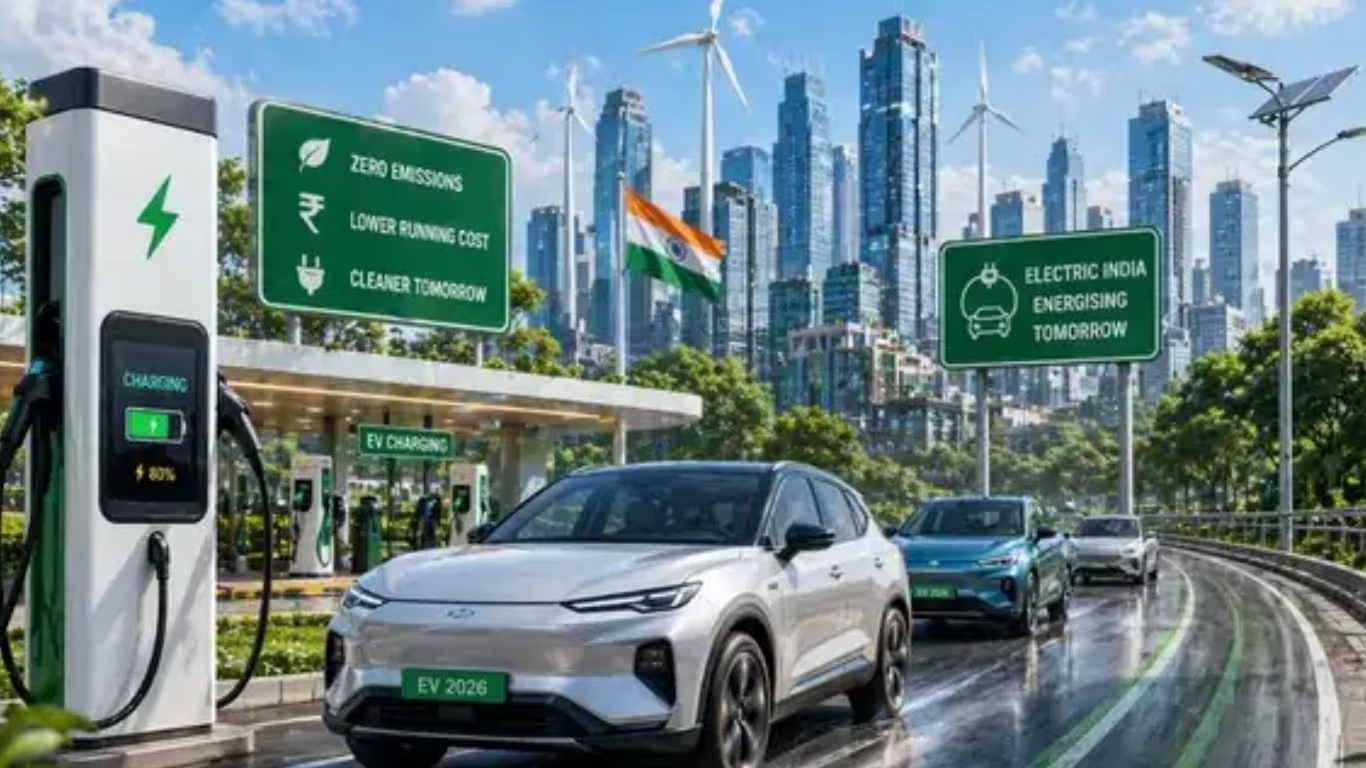
India’s passenger electric vehicle (EV) market is entering a strong growth phase, with penetration expected to rise to about 8% in FY27 from 4.2-4.5% in FY26. This increase could push annual electric car sales close to 400,000 units, nearly doubling the market within a year if supply improves.
Key Highlights
- India’s EV market penetration expected to rise from 4.2-4.5 percent in FY26 to 8 percent in FY27
- Annual electric car sales could reach 400000 units if supply constraints ease
- Tata Motors plans to increase monthly EV production from 10000 to 15000 units
- JSW MG Motor and Mahindra also ramping up EV output to meet strong demand
Rising fuel prices, better charging infrastructure, expanding product portfolios, and growing consumer awareness are driving this surge. The government’s focus on energy security and cleaner mobility, highlighted by Prime Minister Narendra Modi’s calls to reduce fossil fuel imports, further supports electrification. Elevated crude oil prices have also strengthened the case for electric vehicles.
Current Sales and Market Potential
In FY26, India’s passenger vehicle industry sold about 4.7 million vehicles, with electric cars accounting for around 200,000 units. If total industry volumes rise to 4.9-5.0 million units in FY27 and EV penetration reaches 8%, electric vehicle sales could approach 400,000 units. This would represent a doubling of the market in just one year.
Automakers now face the challenge of meeting demand rather than generating it. Tata Motors Passenger Vehicles Managing Director Shailesh Chandra noted that current EV penetration is limited by supply, not consumer interest. He stated, “Right now it is at 5.5%. Potentially it is at 10% if the supply goes up because right now it is supply-constrained.”
Tata Motors, India’s largest electric carmaker, is seeing strong demand. While EVs make up about 15-16% of Tata’s current sales, bookings have reached nearly 23%. This suggests demand is outpacing production. Chandra said the recent fuel price increases have accelerated the shift towards alternative powertrains. He observed that in the last two months, demand has jumped two to two-and-a-half times compared to earlier periods.
Automaker Strategies and Production Plans
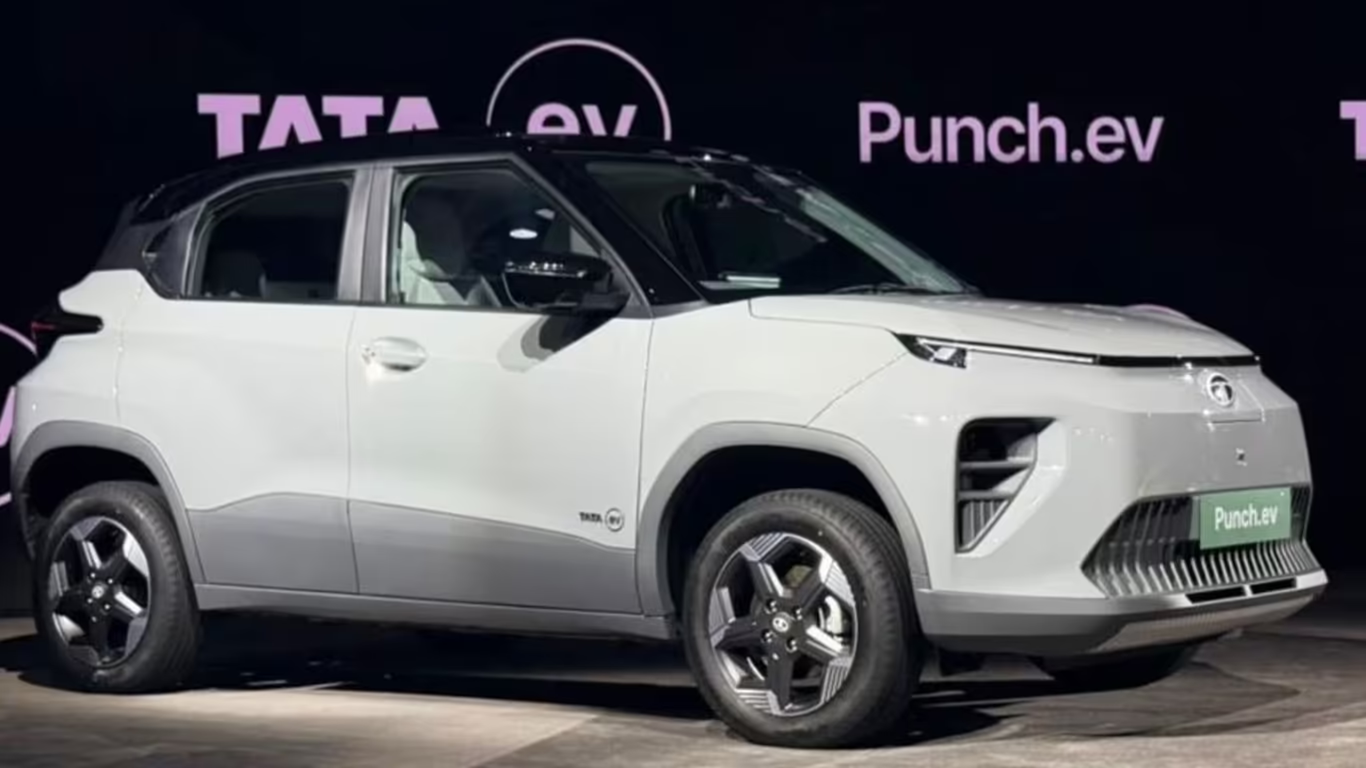
To meet rising demand, Tata Motors plans to raise EV production by about 50%, increasing monthly output from 10,000 to 15,000 units in the coming months. At this rate, Tata Motors could surpass 100,000 annual EV sales, a first for any Indian passenger vehicle manufacturer. If supply-chain issues ease, the company could approach 150,000 annual EV sales. Chandra emphasized that market share is now determined by supply capacity.
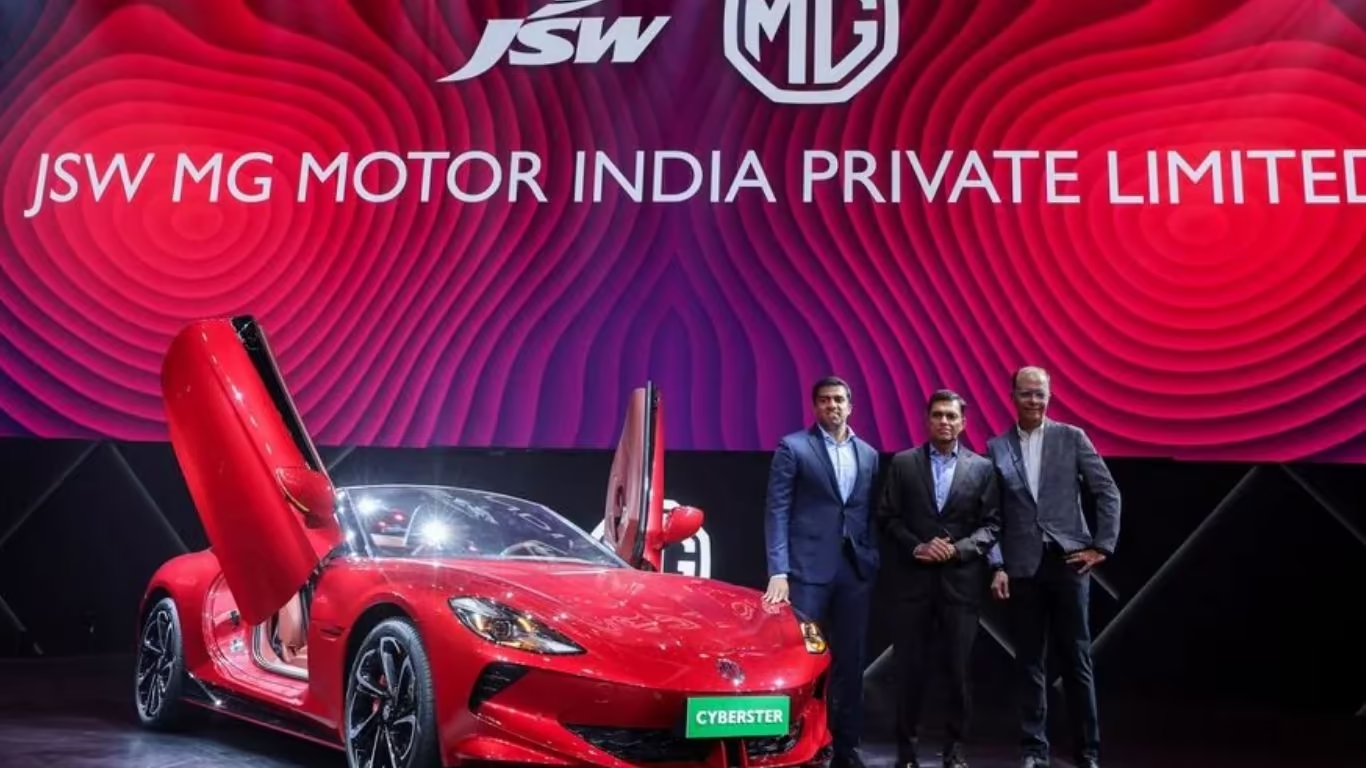
JSW MG Motor India is also experiencing increased demand. Managing Director Anurag Mehrotra reported that passenger EV penetration rose from 5.7% in April to around 6.5% in May. He expects penetration to reach 8% or more by year-end, attributing the surge partly to geopolitical tensions in West Asia and higher fuel prices. The company targets annual sales of about 99,000 units, with electric, hybrid, and other new-energy vehicles making up 50-70% of volumes. Models like the Windsor EV, Windsor Long Range, and M9 will support this growth.
Mahindra & Mahindra is expanding production of its born-electric SUVs, the XEV 9e and BE 6, following strong market response. Industry estimates show demand for these models has exceeded expectations, leading to increased capacity and shorter waiting periods.
Outlook for FY27 and Beyond
Tata Motors, JSW MG Motor, and Mahindra are expected to drive most of the incremental EV volumes over the next 12–18 months. If the industry reaches 8% penetration and 400,000 annual sales, India will add nearly 200,000 new EV sales in a year, matching the entire market size of the previous year. This rapid growth marks a significant shift in India’s electric mobility landscape, moving the focus from consumer awareness to supply, infrastructure, and localization.
Also Read: Tata Motors boosts EV push with higher investment and expanded production capacity
CarBike 360 Says
India’s electric car market is clearly on a strong growth trajectory, supported by aggressive production plans and improving infrastructure. As automakers expand their EV portfolios and prices gradually become more competitive, adoption is expected to accelerate further. This shift not only signals a cleaner mobility future but also positions India as a key player in the global electric vehicle landscape.


You May Like


Find your perfect car

Budget

Brand

Body Type

Fuel

Mileage

More
Latest Car Videos




Other Car News
2026 Skoda Slavia Facelift to make debut on 18 August with new features
Kia Carens crosses 3 lakh sales milestone in India, strengthens position in family MPV segment
Tata Safari Prices increased in India, now start at Rs 13.40 lakh
Tata Harrier and Safari Dark Editions launched with new features and updated prices
Listen to Car Audios