

 ELECTRIC
Indian auto industry sees major investments, partnerships, and policy shifts in May 2026
 Add CarBike360 on Google
May 2026 marked a transformative phase for India’s auto sector, driven by fresh investments, global collaborations, and supportive policy shifts accelerating EV adoption and local manufacturing.

May 25, 2026 04:50 am IST
Published On
May 24, 2026 03:00 pm IST
Last Updated On
May 25, 2026 04:50 am IST
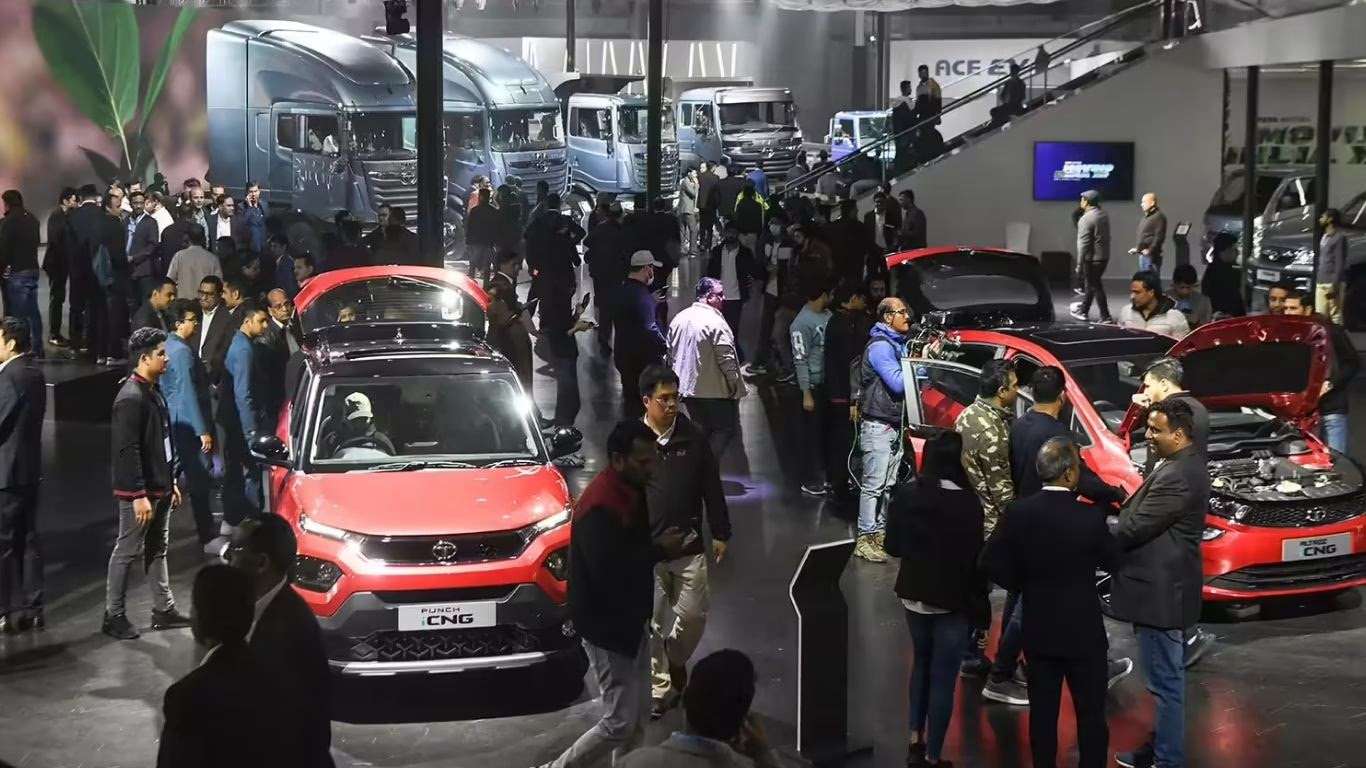
The Indian automotive sector witnessed significant developments in the week of May 18-24, 2026. Automakers and component manufacturers focused on partnerships, capacity expansion, electrification, and export strategies to prepare for the next growth phase. Key players such as Honda, JSW Motors, Stellantis, Tata Motors, and Eicher Motors announced major investments and strategic moves.
Key Highlights
- Honda, JSW Motors, Stellantis, and Tata Motors announce major investments and partnerships
- JSW Motors secures Rs 8,000 crore SBI funding for new energy vehicle manufacturing
- India remains world leader in electric three-wheeler sales with 801,431 units in 2025
- Ferrari bookings open at 30 percent lower prices ahead of proposed India-EU trade deal
- Bosch, Motherson, Uno Minda, and Apollo Tyres reveal significant FY27 capital expenditure plans
Major Investments and Strategic Alliances
Honda Cars India is actively seeking new partnerships to improve scale and competitiveness. The company aims for double-digit growth in FY2026-27 with six new model launches, focusing on SUVs, hybrids, and premium vehicles. India is now among Honda’s top three global priority markets, according to Takashi Nakajima.
JSW Motors secured Rs 8,000 crore in long-term project finance from State Bank of India. This funding will support its new energy vehicle (NEV) business and the development of a greenfield manufacturing facility in Chhatrapati Sambhajinagar, Maharashtra. The plant will have an annual capacity of 3.5 lakh vehicles and will involve global equipment partners.
Stellantis announced plans to develop and assemble a new Jeep model in India through its joint venture with Tata Motors. This move positions India as a low-cost manufacturing and export hub for Stellantis’ new energy vehicles. The upcoming Jeep will be one of five globally oriented products developed in Asia using local partnerships.
Tata Motors Passenger Vehicles outlined plans for FY27, including two new nameplates and four facelifts across internal combustion and electric vehicle segments. The company expects strong growth, supported by recent launches such as the Sierra, Punch.ev, Harrier.ev, and petrol versions of Harrier and Safari.
Eicher Motors announced a Rs 2,200 crore capital expenditure for Royal Enfield in FY '27. Of this, Rs 1,000 crore will go towards capacity expansion, with the rest allocated to new product development and electric vehicle programs. Royal Enfield is also considering a CKD facility in Mexico following tariff changes.
Policy Developments and Market Trends
The Indian government held consultations to accelerate the adoption of electric buses and trucks. The Centre aims to collaborate with private sector entities for a large-scale rollout of zero-emission commercial vehicles. India also notified E30 fuel standards to support the flex-fuel push.
States linked to the National Capital Region are moving towards stricter clean mobility rules for fleets and cab aggregators. The Haryana government is considering restrictions on new petrol and diesel vehicle additions in these segments, reflecting a broader shift towards clean mobility.
Ferrari dealerships in India began accepting bookings at prices nearly 30% lower than current levels. This anticipates the proposed India-European Union free trade agreement, which could reduce import duties on European-built cars from 110% to 35% in the first year and eventually to 10%.
Component Sector and Financial Results
Bosch Ltd. entered a 50:50 joint venture with Wheels India and Brakes India to develop air system solutions for commercial vehicles. Motherson Group plans a Rs 6,000 crore capital expenditure in FY27, with half for growth projects. Uno Minda is preparing for an execution-heavy year with Rs 1,750 crore capex, focusing on EV powertrain and sunroof projects.
Apollo Tyres announced a Rs 3,500 crore capex for FY27 as capacity utilization nears 90% in India and Europe. Subros reported FY26 revenue of Rs 3,755 crore, up 11.52% year-on-year, and profit after tax of Rs 165 crore. SEDEMAC Mechatronics posted a 61% revenue increase to Rs 1,058 crore in FY26, with profit after tax rising 119% to Rs 104 crore.
India maintained its position as the world’s largest electric three-wheeler market for the third consecutive year, with record retail sales of 801,431 e-3Ws in 2025, up 15% year-on-year.
Also Read: Bosch eyes strong growth in India amid new automotive regulations and tech push
CarBike 360 Says
The developments in May 2026 highlight a decisive shift in India’s automotive landscape, with strong momentum toward electrification, localization, and innovation. As investments grow and policies evolve, the industry is positioning itself for long-term sustainability and global competitiveness. This phase not only signals immediate growth but also lays a solid foundation for the future of mobility in India.


You May Like


Find your perfect bike

Brand

Budget

Body Type

Fuel

Mileage

More
Latest Bike Videos





Other Bike News

Spark Minda reports record FY26 revenue, strengthens EV technology partnerships

Bosch eyes strong growth in India amid new automotive regulations and tech push

Triumph Street Triple 765 RX launched in India with track-focused Upgrades

Triumph Speed Twin 1200 Cafe Racer Edition launched in India at Rs 17.99 lakh
Listen to Bike Audios


Vihan AI - Your Car assistant
Ask me anything about cars, prices, and comparisons.