

 ELECTRIC
INR Cr 223 Institutional Backing Lays Strong Foundation for ev.fin's Next Phase of Financing Growth
 Add CarBike360 on Google
evfin’s latest INR 223 crore institutional funding marks a major step in scaling its EV financing operations and supporting the rapid adoption of electric mobility across India.

Jun 10, 2026 02:37 pm IST
Published On
Jun 10, 2026 02:32 pm IST
Last Updated On
Jun 10, 2026 02:37 pm IST
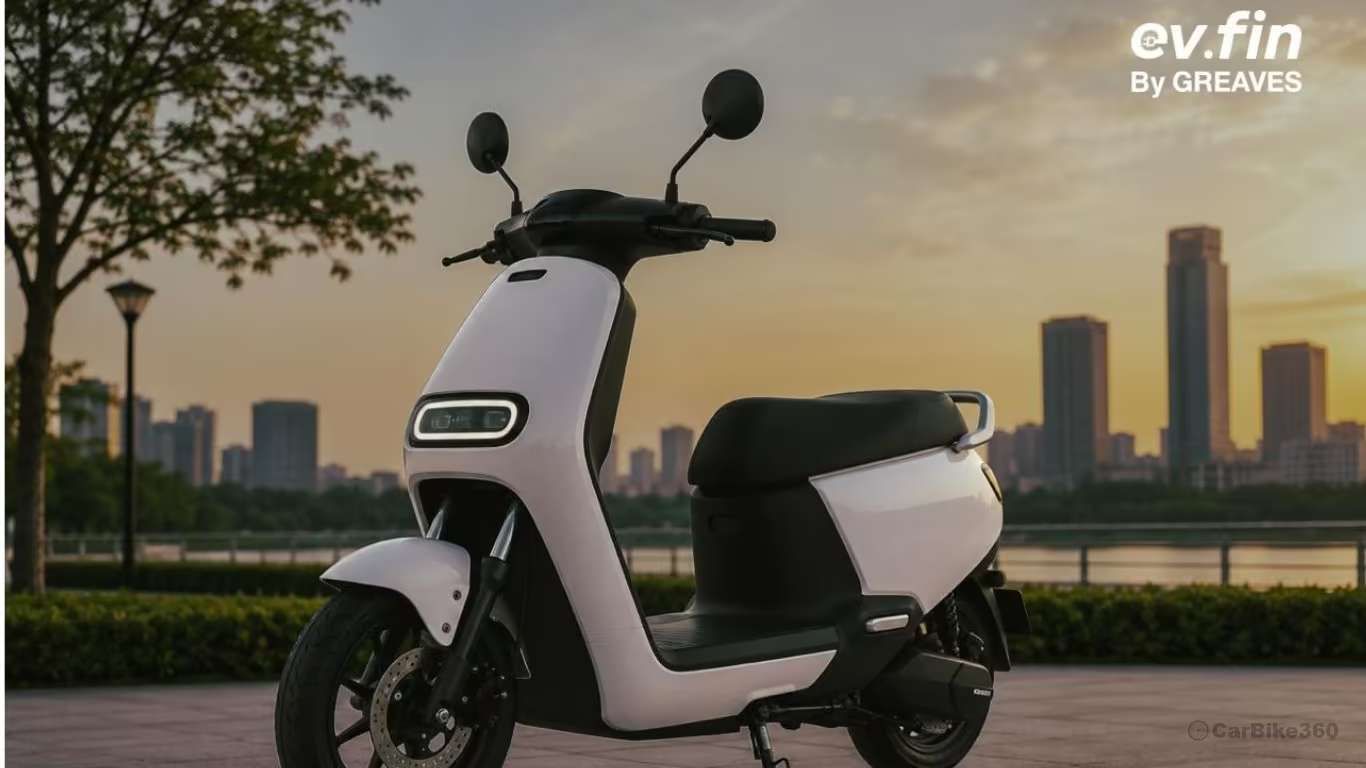
ev.fin, the EV-focused NBFC of Greaves Cotton, has deployed part of a previously sanctioned institutional debt of INR 223 crore to accelerate lending and expand its presence across India. The capital sourced via listed NCDs and structured term loans from marquee lenders, including AK Capital, Northern Arc, AU Small Finance Bank, Ambit Finvest, MAS Financial, and Maanveeya, supported rapid deployment during April–March 2026 and underpins the company’s multi-brand EV financing strategy.
ev.fin’s differentiated lending model, which evaluates battery health and residual values in addition to borrower income, has helped embed the lender within dealer networks of major OEMs such as Ather, Ampere, River, Hero, Bajaj, TVS, Suzuki, and Ultraviolette. This OEM-agnostic, lifecycle-focused approach has allowed ev.fin to grow its managed AUM to about INR 522 crore and record cumulative disbursements past INR 774 crore as of March 2026.
Institutional Confidence and Strategic Deployment
Institutional backing for the INR 223 crore package signals market confidence in ev.fin’s credit profile and business plan and has contributed to a stable rating view from India Ratings and Research (Ind‑Ra) at IND A⁻ with a stable outlook. Management says the funds will be strategically deployed to expand the asset book, deepen penetration in high-growth segments, and invest in technology to improve underwriting and operational efficiency.
This capital infusion also supports the company’s geographic push: ev.fin now services 74 cities and aims to reach 80+ by July 2026, serving a customer base of over 55,000 retail buyers, MSMEs, and fleet operators across emerging mobility markets.
Market Context and Business Implications
India’s E2W and E3W markets are expanding rapidly, but the transition depends on risk-adjusted and product-fit financing solutions. Lower cost of funds enabled by institutional support should improve competitive pricing and help the NBFC scale sustainably while maintaining asset quality through prudent underwriting frameworks.
By combining institutional capital, a differentiated credit approach, and technology-led execution, ev.fin aims to be a trusted financing partner for EV adoption across urban and semi-urban markets—supporting not just individual buyers but also small businesses and fleet operators looking to electrify operations. Management also indicated ongoing evaluation of additional structured funding avenues aligned to portfolio growth, suggesting continued fund-raising activity as the company scales.
What Does This Mean for Stakeholders?
For OEMs and dealers, ev.fin’s embedded model simplifies the purchase path for customers and supports higher conversions on EV sales through tailored financing options. For investors and lenders, the transaction demonstrates how lifecycle-aware finance products can reduce credit uncertainty in EV lending and attract institutional capital when combined with strong distribution and underwriting.
Also Read: Hero MotoCorp faces margin pressure as input costs surge
CarBike 360 Says
With INR 223 crore in institutional backing, evfin is well-positioned to accelerate its expansion and strengthen its role in India’s evolving EV ecosystem. The fresh capital not only boosts its financing capabilities but also reinforces investor confidence, enabling the company to drive accessibility, innovation, and growth in electric vehicle adoption across the country.


You May Like


Find your perfect bike

Brand

Budget

Body Type

Fuel

Mileage

More
Latest Bike Videos


Other Bike News

Listen to Bike Audios


Vihan AI - Your Car assistant
Ask me anything about cars, prices, and comparisons.