ELECTRIC
Renault Shifts to India-Focused Strategy with Local Control and New Platforms
 Add CarBike360 on Google
Renault is shifting to an India-focused strategy with full local control, new vehicle platforms, and a broader powertrain mix. The company will use its Chennai facility as a global export hub to boost competitiveness.

Apr 17, 2026 03:33 am IST

Renault Group has announced a major strategic shift, placing India at the center of its growth plans. The French carmaker is granting full autonomy and control to its local management. This move aims to enable faster decision-making and greater flexibility in the Indian market, which Renault considers one of its most important globally.
Key Highlights
- Renault grants full local control to its Indian management for faster decision making
- Two new vehicle platforms will target entry and mid-size segments including a new Duster SUV
- Expanded powertrain options will include petrol CNG hybrid and electric across the product range
- Chennai operations will serve as a global export hub for vehicles and components
Renault’s global leadership acknowledged that previous global processes limited the company’s ability to adapt quickly in India. François Provost, a senior executive, emphasized the importance of local accountability and speed. He stated that the new approach delegates authority to the Indian team to deliver products suited for Indian consumers.
New Product Platforms and Powertrain Options

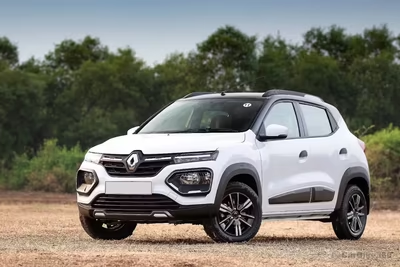
Renault’s revised strategy includes the introduction of two new vehicle architectures designed specifically for India. At the entry level, the Renault Group Entry Platform (RGEP) will replace the older small-car architecture. This new platform will support a new generation of compact vehicles priced under ₹10 lakh. These vehicles will offer improved digital features and flexibility for different body styles.
For higher market segments, Renault will use its CMF-B–based architecture. This platform will support the return of the Renault Duster SUV and introduce a new three-row SUV. These models aim to strengthen Renault’s presence in the mid-size and upper segments of the Indian market.
Renault is also expanding its powertrain options to match India’s diverse needs. The company plans to offer petrol, CNG, hybrid, and electric powertrains across its product range. This multi-energy approach addresses affordability, regulatory requirements, and varied usage patterns in India.
Export Strategy and Organisational Changes
Renault is positioning its Chennai operations as a global export hub for both vehicles and components. By leveraging India’s cost advantages and engineering talent, Renault aims to serve international markets and improve manufacturing scale. This export-led strategy is expected to enhance the company’s global competitiveness.
While Renault’s new product pipeline will fill gaps that have emerged in recent years, company leaders stress that organisational change is the foundation of its turnaround. The Indian team now operates with full delegation and a unified focus, marking a significant shift from previous structures.
This India-centric strategy reflects Renault’s commitment to adapting its business model to local market realities. The company aims to regain momentum by combining local leadership, tailored products, and an expanded export role.


You May Like




Find your perfect car

Budget

Brand

Body Type

Fuel

Mileage

More
Latest Car Videos



Other Car News
Listen to Car Audios