ELECTRIC
Tata Motors adopts CJLR platform for Avinya premium EV launch in 2027
 Add CarBike360 on Google
Tata Motors is set to elevate its EV portfolio with the Avinya, built on the advanced CJLR platform and slated for a 2027 debut, promising global standards and premium innovation.

Jun 03, 2026 07:01 am IST
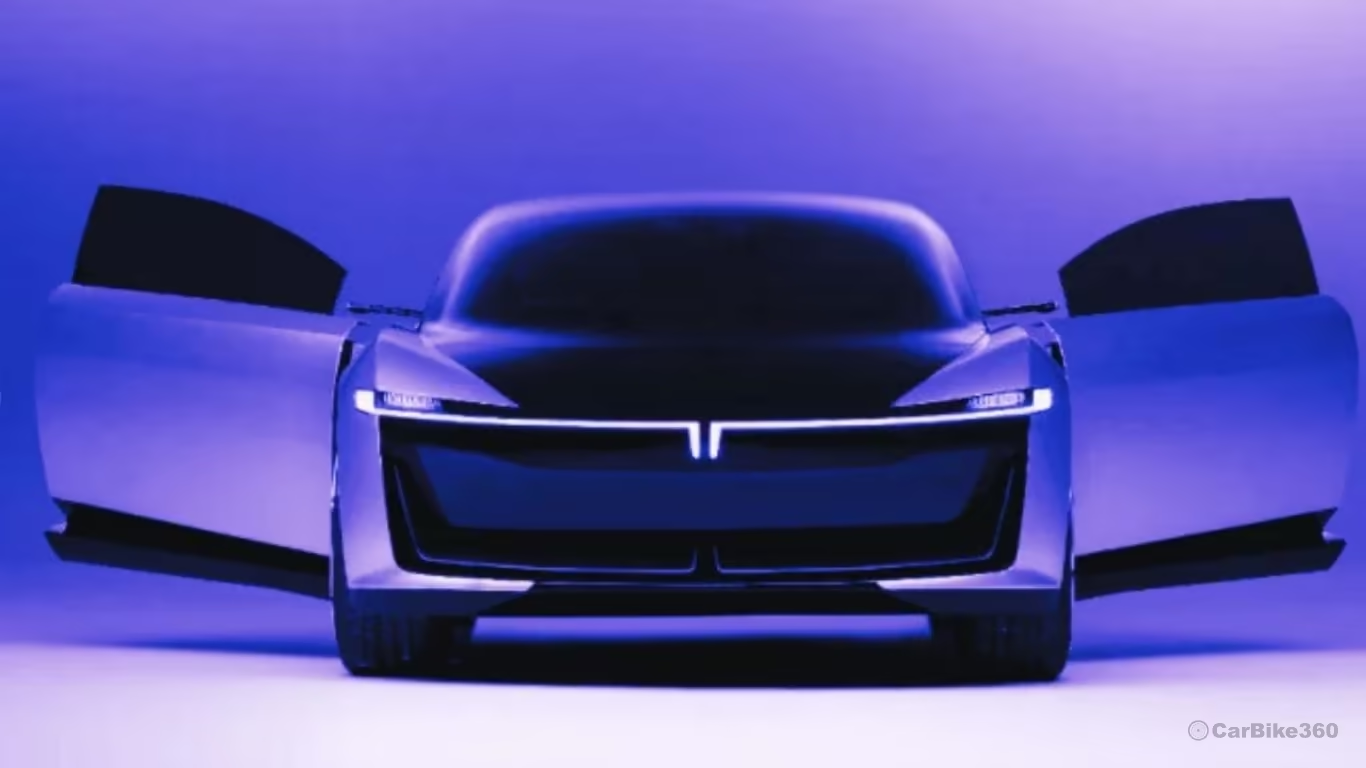
Tata Motors has changed its technology strategy for the Avinya premium electric vehicle program. The company will now use a platform from the Chery-JLR (CJLR) ecosystem instead of the previously planned JLR Electrified Modular Architecture (EMA). This move aims to reduce development time, improve cost efficiency, and accelerate the launch of Tata’s premium electric vehicles.
Key Highlights
- Tata Motors shifts Avinya EV platform to Chery-JLR CJLR ecosystem
- First Avinya X model prototypes expected in 2024 with launch targeted for 2027
- Battery packs for initial models likely in 65 to 80 kWh range
- Production to begin at TMPV-JLR facility in Panapakkam Tamil Nadu
- Avinya family to expand with larger three-row premium electric SUV
The first production model under this new plan will be the Avinya X, known internally as the P2 program. Engineering prototypes are expected later in 2024, with a market launch targeted for 2027. Tata Motors has shifted its focus from the earlier P1 program to prioritize the Avinya X’s development and production.
Platform and Engineering Changes
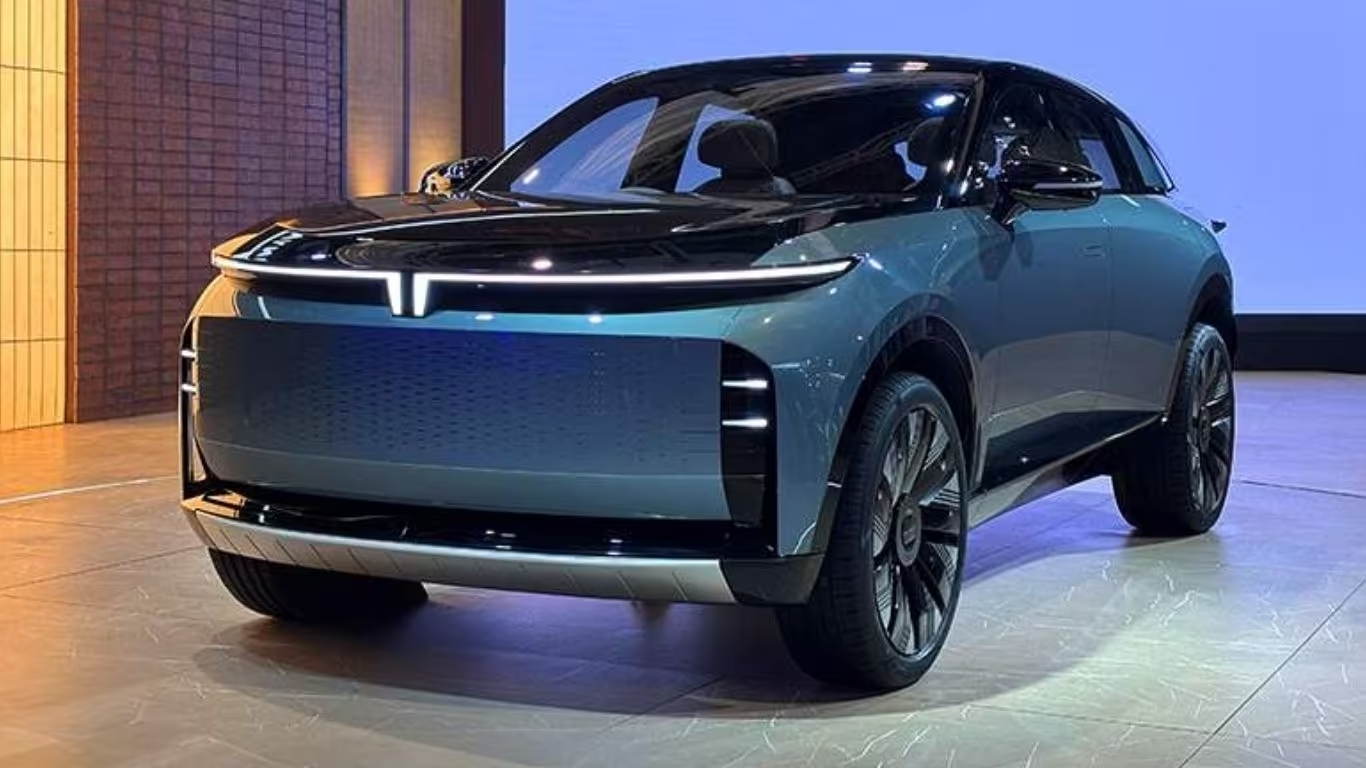
The CJLR platform will provide the mechanical foundation for the Avinya X. Tata Motors is reworking key electronics, software, and vehicle systems to meet Indian market requirements. Tata Technologies’ engineering teams in China, India, and the UK are collaborating to adapt the architecture. This decision reflects a broader industry trend, as global automakers increasingly rely on China’s advanced electric vehicle ecosystem, known for its leadership in batteries, software, and supply-chain efficiency.
Adapting the EMA platform for Avinya’s intended market position and production volumes had become difficult to justify. By using the CJLR platform, Tata Motors can focus on localization, software, connectivity, and customer experience while leveraging a proven electric vehicle architecture.
Battery Strategy and Manufacturing Plans
Industry sources indicate that the first Avinya models will likely use battery packs ranging from 65 to 80 kWh. This range aims to balance driving range, weight, and affordability. While Tata Group’s battery venture Agratas remains central to long-term plans, initial vehicles may use batteries from existing partners until Agratas reaches full production scale. Battery sourcing, pack integration, and localization strategies are still being refined as the program advances.
The Avinya program highlights growing collaboration between Tata Motors and JLR. Over the past two years, the companies have expanded cooperation in engineering, sourcing, electrification, and software development. The recent appointment of Balaje Rajan to a larger role in the UK supports greater alignment across future vehicle programs and technology initiatives.
Future Models and Production Ecosystem
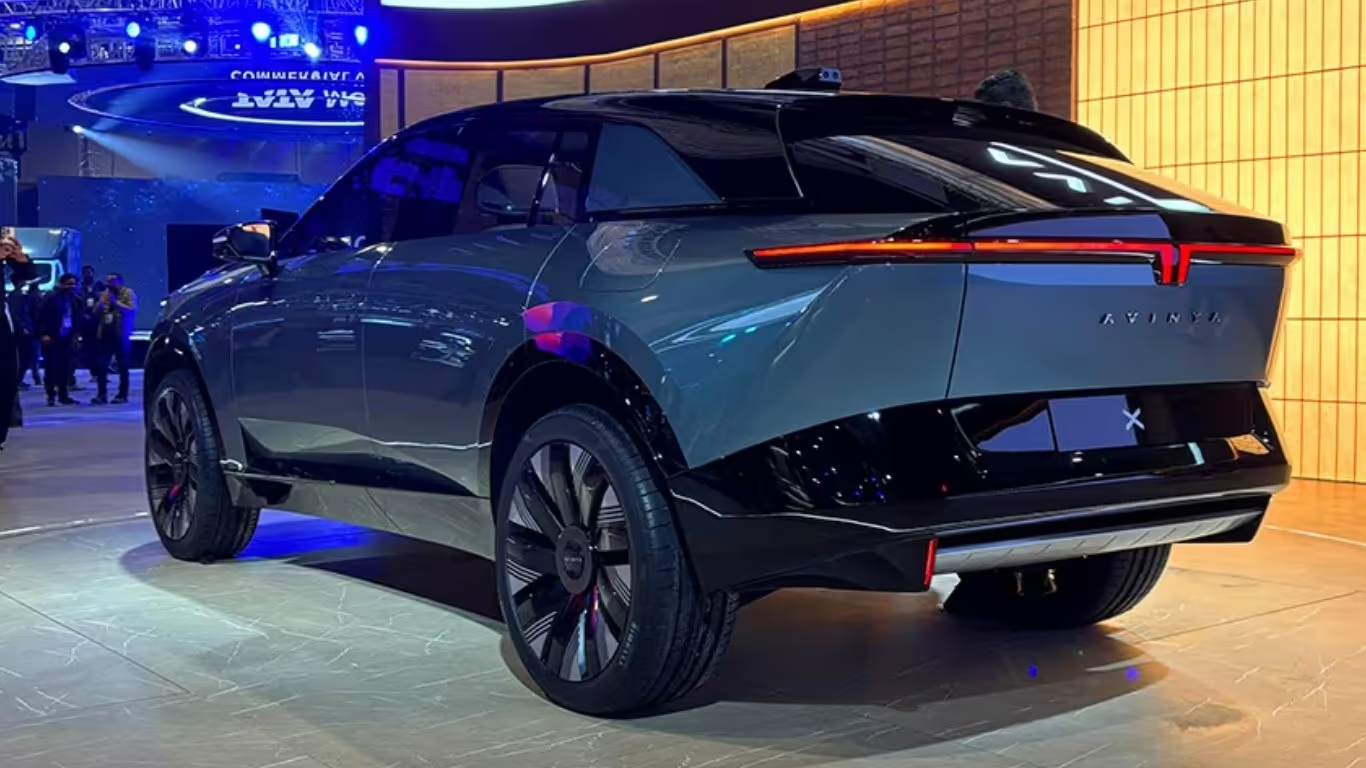
Tata Motors is also considering a larger three-row premium electric SUV as part of the Avinya family. This model is expected to follow the Avinya X and help establish Avinya as a standalone premium electric vehicle brand. The Chennai-Ranipet ecosystem will play a key role in production, with an assembly facility capable of producing around 30,000 units a year supporting initial manufacturing. This facility could become more significant as localization increases.
JLR is expected to use the broader architecture family for future global products, enabling shared sourcing, manufacturing, and supplier investments. Chery will supply architectures to multiple global partners, expanding the reach of the CJLR platform.
The first Avinya vehicle for India, launching in 2027, will use the Freelander platform from CJLR. Production will take place at the new TMPV-JLR facility in Panapakkam, Tamil Nadu. Tata Motors aims to build globally competitive vehicles while strengthening domestic capabilities through this integrated approach.
Also Read: Tata Motors registers 42% growth in May 2026 with EV sales surging 85%
CarBike 360 Says
With the adoption of the advanced CJLR platform, Tata Motors is clearly positioning the Avinya as a global-standard premium EV. Expected to combine cutting-edge technology, enhanced performance, and modern design, the 2027 launch could mark a significant leap for India’s electric mobility space, reinforcing Tata’s leadership while setting new benchmarks in the premium EV segment.


You May Like


Find your perfect car

Budget

Brand

Body Type

Fuel

Mileage

More
Latest Car Videos




Other Car News
Listen to Car Audios