ELECTRIC
Tata Motors to bring back physical controls in upcoming cars
 Add CarBike360 on Google
Tata Motors is set to revive physical controls in its future car lineup, focusing on improved driver ergonomics, safety, and ease of use over fully touchscreen-based systems.

By Rohan Verma
Jun 17, 2026 07:02 am IST
Published On
Jun 16, 2026 03:00 pm IST
Last Updated On
Jun 17, 2026 07:02 am IST
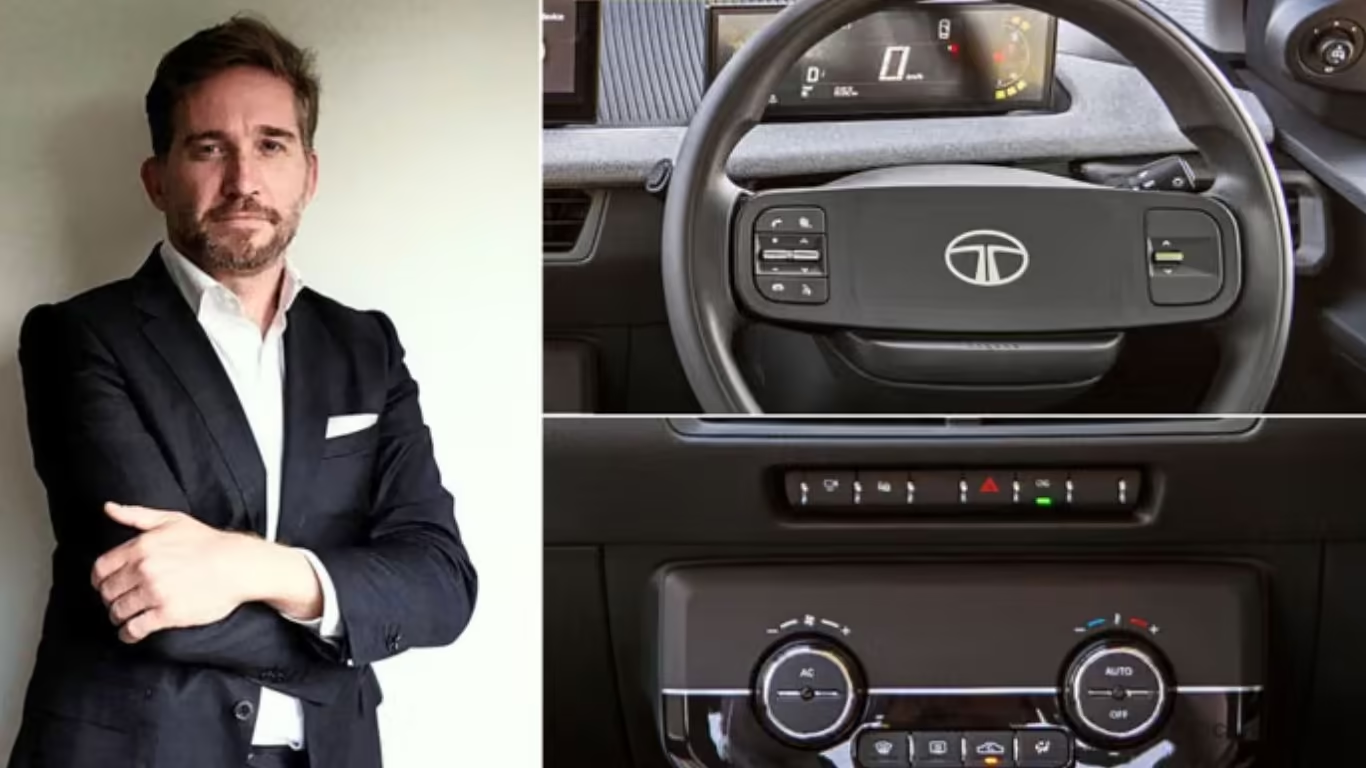
Tata Motors will reintroduce more physical controls in its future vehicle models, responding to customer feedback about touchscreen-heavy interiors. Chief design officer Martin Uhlarik confirmed the company’s plans, noting that while Tata previously pursued a 'no-button' approach in several products, customers have expressed a desire for some physical interfaces.
Key Highlights
- Tata Motors will reintroduce more physical controls in future vehicle models
- Current models above Tiago and Tigor rely mainly on touch-based interfaces
- The company will use a hybrid approach with both digital and physical controls
- Global carmakers like Volkswagen and Hyundai are also retaining more physical controls
Customer Feedback Drives Design Changes
Currently, all Tata models above the Tiago and Tigor, such as the Punch, Nexon, Curvv, Harrier, Safari, and Sierra, rely heavily on touch-based controls. These include touch-based HVAC systems and haptic buttons on steering wheels. Uhlarik explained that the company will not replace touchscreens entirely but will adopt a hybrid approach. This means combining physical controls and digital interfaces based on the function.
“It will be a hybrid,” Uhlarik said. “There will be screens and user interfaces, but we want strategic areas with physical interfaces.” He added that customer concerns go beyond ease of use. Many drivers feel that physical controls offer a stronger sense of interaction with the vehicle, especially as cabins become more digital.
Focus on Key Touchpoints and Quality
Uhlarik emphasized that Tata will not bring back physical controls for every function. Instead, the company will focus on key touchpoints and improve the quality and feel of these controls. “I’d rather not do all buttons. Maybe we’ll do half the buttons, but the buttons will be exceptional,” he stated.
He also noted that well-designed switches can enhance the cabin experience. “If they’re done nicely, switches or buttons can become almost a jewelry object,” Uhlarik remarked. The goal is to make these controls both functional and aesthetically pleasing.
Industry-Wide Shift Toward Physical Controls
Tata’s approach reflects a broader trend in the automotive industry. Global carmakers such as Volkswagen, Hyundai, and Mercedes-Benz have also announced plans to retain or reintroduce more physical controls in their vehicles. These companies cite customer feedback, ease of use, and safety as key reasons for the shift.
Physical controls can help drivers operate key functions without taking their eyes off the road. This can improve safety and enhance the overall driving experience. As digital interfaces become more common, automakers are seeking a balance between technology and usability.
Also Read: Tata Motors to raise passenger vehicle prices by Up to 1.5% from July 2026
CarBike 360 Says
Tata Motors’ decision to bring back physical controls signals a practical shift toward user-friendly design and enhanced driving safety. As touchscreens dominate modern cabins, this move balances technology with accessibility. Going forward, Tata’s approach could set a new benchmark in the industry, prioritizing intuitive interaction while still embracing innovation in its upcoming vehicle lineup.


You May Like


Find your perfect car

Budget

Brand

Body Type

Fuel

Mileage

More
Latest Car Videos

Top Auto News of the Week | Hyundai i20 Leak, Honda ZR-V, Tata Sierra EV, Skoda EV & More!
Talking about new Honda City and upcoming ZR-V SUV with Honda India’s Kunal Bahl!
2026 Honda City Launched in India - Better than VW Virtus, Hyundai Verna & Skoda Slavia?

Weekly Auto & EV Wrap-Up: Luxury Launches, AI Tech & Big Industry Updates!
Other Car News

Listen to Car Audios