ELECTRIC
The Indian Government Passes Acoustic Alert (AVAS) for EVs to Promote Security & Improved Pedestrian Safety Standards
 Add CarBike360 on Google
The government has made Acoustic Vehicle Alerting Systems (AVAS) compulsory for all electric vehicles in India, ensuring safer roads for pedestrians and cyclists while aligning with international safety standards.

Sep 30, 2025 10:08 am IST
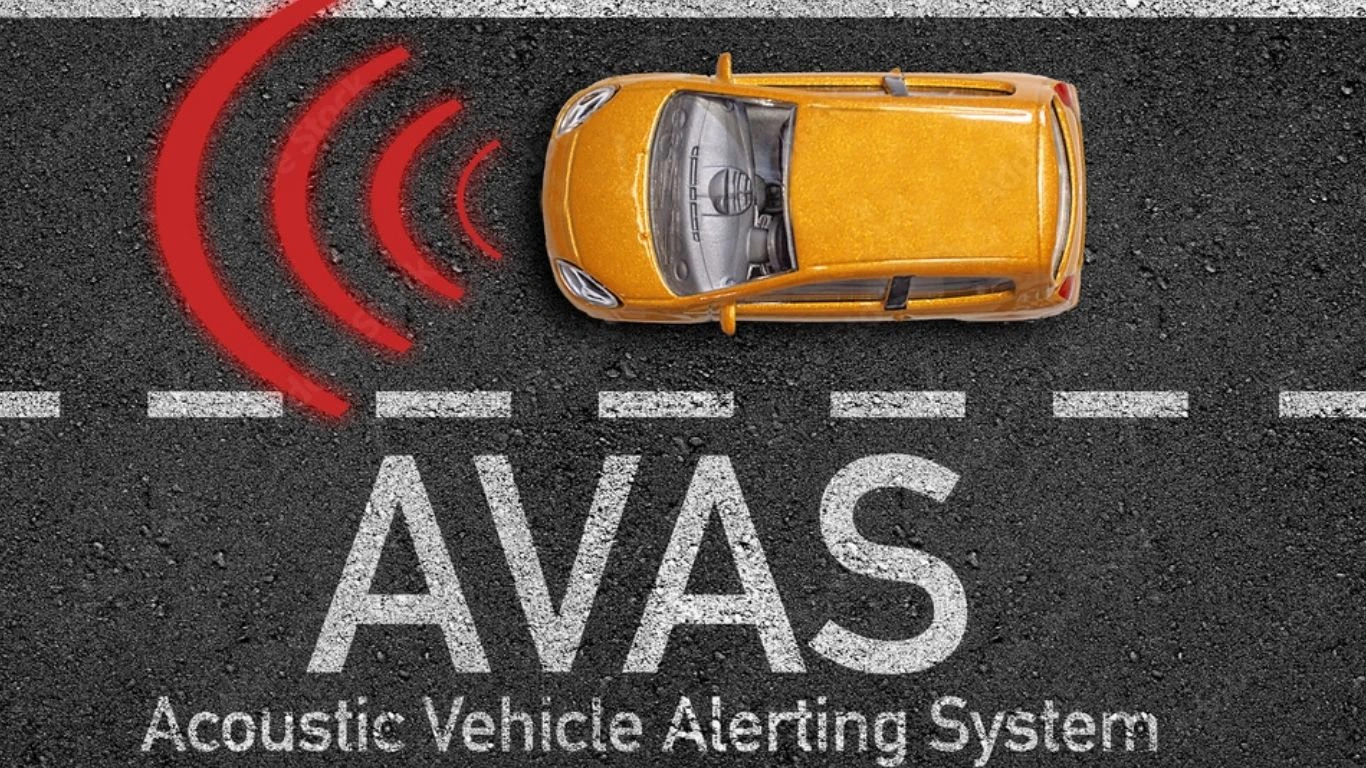
The Indian government has recently passed an important rule and regulation regarding pedestrian safety in India. As per the latest report, the Ministry of Road Transport and Highways has issued a draft notification for all electric cars, buses, and trucks to be equipped with the sophisticated feature of the Acoustic Vehicle Alerting System (AVAS) from October 2027. This emphasizes addressing the safety concerns related to the silent operations of electric vehicles.
The decision comes amid rising concerns over road safety, particularly for pedestrians and cyclists, who face difficulties hearing near-silent EVs in urban environments. The parliament has passed the draft stating that all upcoming manufactured electric passenger and commercial vehicles must have AVAS technology pre-installed by October 2026. The move highlights the government’s focus on creating a robust framework for EV adoption that goes beyond incentives and infrastructure.
What is AVAS?
AVAS stands for Acoustic Vehicle Alerting System. It is mainly a device designed for electric vehicles and hybrid vehicles. Using this device, these cars—which are silent when accelerating—emit artificial noises to warn cyclists, pedestrians, and other road users of potential hazards. As EVs operate silently compared to internal combustion engine (ICE) counterparts, AVAS fills this audio gap, reducing the risk of accidents, particularly in trafficked Indian streets and residential areas.
Scope of Implementation

The new rule & regulation apply to all the categories of EVs under the Bharat NCAP safety standards. These AVAS devices will switch on automatically when the vehicle is moving at a speed of up to 20 kilometers per hour. As the new technology prevails, the issue posed by Quiet Road Transport Vehicles (QRTVs) that run silently will be resolved.
Automakers must integrate AVAS into both new models and existing lineups scheduled for sale after the law takes effect. Additionally, manufacturers may be required to offer retrofit kits for popular EVs already on the road. This ensures comprehensive coverage without leaving early adopters behind.
Global Position & Consumer Benefit
The AVAS technology is not a new thing. This safety feature has already been used in the European and Japanese automotive markets in EVs in the past. According to the report by the World Forum for Harmonization of Vehicle Regulations (WP.29), AVAS had already been highlighted as mandatory safety equipment for reducing pedestrian-related accidents.
India’s adoption of the same framework underlines its intent to harmonize domestic automotive safety with international benchmarks.
Pedestrians, cyclists, and visually impaired individuals stand to gain the most from the AVAS rollout. However, the AVAS requirement will not be beneficial at higher speeds, as the vehicle tires will themselves create sufficient noise to highlight the moving vehicle coming from the opposite direction.
Conclusion
While the regulation is expected to bring immediate safety gains, experts suggest its success lies in effective enforcement. Regular compliance checks and harmonization with Bharat NCAP safety ratings could strengthen the rollout. Unlike ADAS, the implementation of the AVAS will be the next big thing in the Indian automotive industry. This will create buzz and trends, and we can see the transition shifting towards AVAS as the main priority for the automotives.


You May Like



Find your perfect car

Budget

Brand

Body Type

Fuel

Mileage

More
Latest Car Videos




Other Car News
Listen to Car Audios