

 ELECTRIC
India confirms 2027 deadline for stricter CAFE-III fuel efficiency standards
 Add CarBike360 on Google
The Government of India has confirmed 2027 as the official deadline for implementing Corporate Average Fuel Economy (CAFE-III) standards, marking a major step toward reducing vehicular emissions.

Apr 14, 2026 08:14 am IST
Published On
Apr 14, 2026 07:01 am IST
Last Updated On
Apr 14, 2026 08:14 am IST
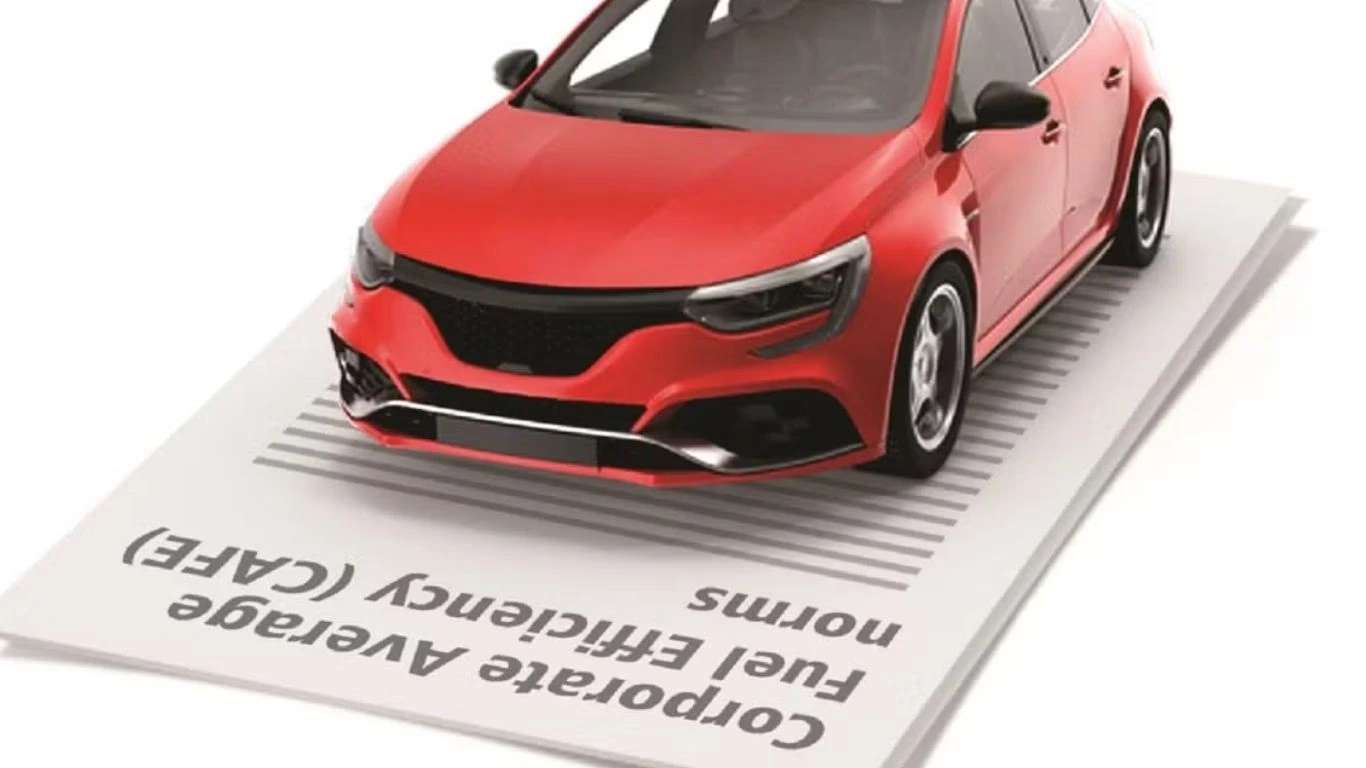
India will enforce stricter fuel efficiency standards for passenger vehicles starting April 1, 2027. The government has confirmed that the deadline for the third phase of Corporate Average Fuel Efficiency (CAFE-III) rules will not be extended. This decision comes as the industry faces internal disagreements over the new norms.
Key Highlights
- India will enforce stricter CAFE-III fuel efficiency standards from April 1, 2027.
- Government rejects deadline extension despite industry divisions over small car treatment
- Draft norms relax emission targets and adjust compliance multipliers and baseline values
- Super credits for hybrids and flex-fuel vehicles have been reduced in the latest draft
- CAFE-III aims to align Indian standards with Europe and East Asia by 2032
Government Stance and Industry Response
Hanif Qureshi, additional secretary at the Ministry of Heavy Industries, stated that an extension is unlikely. He noted that the ministry consulted manufacturers during the drafting process and considered their feedback. The CAFE-III window will run from April 1, 2027, to March 31, 2032.
A high-level government meeting is scheduled for April 16. Secretaries from the ministries of power, heavy industries, and road transport are expected to attend. The meeting aims to resolve ongoing differences before the rules are officially notified.
Industry Divisions and Key Arguments
The industry remains divided over how the new standards affect different vehicle segments. Maruti Suzuki and Toyota Kirloskar advocate for leniency for small, lighter, and more affordable cars. They argue these vehicles are already fuel-efficient and that stricter targets could make them too expensive for first-time buyers.
On the other hand, Tata Motors, Mahindra, Hyundai, and Kia oppose this approach. They argue that a differential framework would disadvantage manufacturers investing in heavier cars with enhanced safety and cleaner powertrains. The debate is significant because small cars have lost market share to sport utility vehicles over the past decade.
Maruti Suzuki's chairman, R C Bhargava, has called for policy support for the small car segment. He frames the CAFE debate as part of this broader discussion.
Details of Draft CAFE-III Norms
The draft CAFE-III norms propose a more flexible compliance framework than previous versions. Penalties are expected to be eased. Manufacturers exceeding emission reduction targets can trade surplus carbon credits with those who fall short. Carmakers with a deficit can offset it by purchasing credits from the Bureau of Energy Efficiency.
The latest draft, circulated in April, relaxes emission targets compared to the September version. The changes favor smaller cars, though not through explicit relief. Key adjustments include reducing the multiplier from 0.002 to 0.00158 for the first year, raising the reference vehicle weight from 1,170 kg to 1,229 kg, and increasing baseline fuel consumption from 3.7264 to 3.9960 litres per 100 km for 2027-28. These changes allow higher permissible emissions for a given vehicle weight.
The explicit cushion for sub-four-meter petrol cars, proposed earlier, has been removed. Instead, relief for small cars is now integrated into the revised curve, but without a specific provision. Maruti Suzuki continues to seek explicit support for small cars.
The super credits system has also changed. Battery electric vehicles still count as three cars for compliance, but the multiplier for strong hybrids drops from 2.0 to 1.6, and for flex-fuel vehicles from 1.5 to 1.1. These changes reduce the compliance advantage for hybrids and flex-fuel cars, a move that Toyota is reportedly unhappy with.
Scope and Objectives of CAFE-III
CAFE rules, under the Energy Conservation Act, apply to M1 category passenger vehicles. These include cars seating up to nine people and weighing up to 3,500 kg. The third phase aims to align India's fuel economy standards with those in Europe and East Asia. The government has so far resisted calls for more time from the industry.
CarBike 360 Says
India’s move to enforce CAFE-III standards by 2027 signals a decisive shift toward sustainable mobility. Automakers will need to innovate, investing in hybrid and electric technologies to meet these stringent efficiency targets. As the nation transitions to a cleaner automotive landscape, this policy underscores India’s growing commitment to balancing industrial growth with environmental responsibility.


You May Like


Find your perfect car

Budget

Brand

Body Type

Fuel

Mileage

More
Latest Car Videos


Talking about new Honda City and upcoming ZR-V SUV with Honda India’s Kunal Bahl!

2026 Honda City Launched in India - Better than VW Virtus, Hyundai Verna & Skoda Slavia?

Weekly Auto & EV Wrap-Up: Luxury Launches, AI Tech & Big Industry Updates!

Weekly news wrap-up - CNG sales up, Fortuner prices raised, Hyundai completes 30 years
Other Car News

Volkswagen Auto expands Sri Lanka portfolio with Volkswagen Taigun and Virtus launch

Varroc Engineering Q4 FY26 profit surges on record revenue and strong EV growth

Cummins India Q4 profit surges to Rs 650 crore on strong domestic demand

Next-Gen Tata Tiago 2026: Variant-wise features, engine options, and pricing details
Listen to Car Audios


Vihan AI - Your Car assistant
Ask me anything about cars, prices, and comparisons.