ELECTRIC CARS
Hyundai Cars
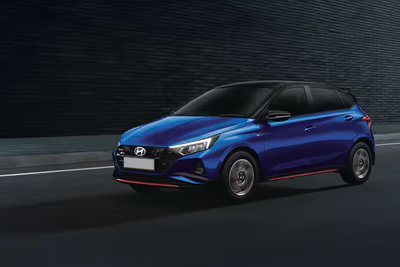
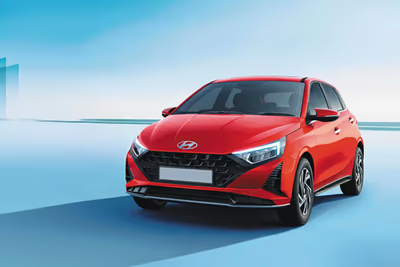
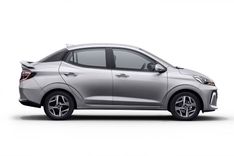
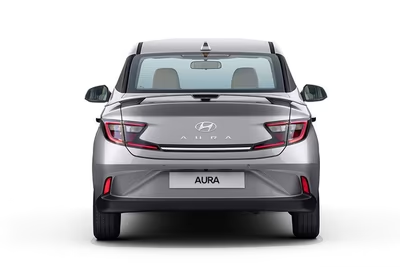
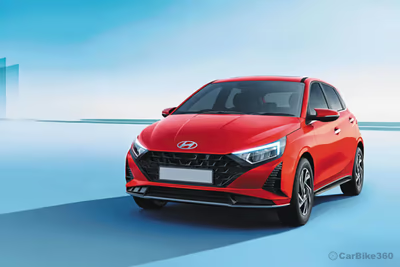
Hyundai currently offers 13 car models in India, catering to diverse customer needs. The lineup includes 8 SUVs, 2 Sedans, 3 Hatchbacks, along with 2 electric cars for buyers looking to switch to cleaner mobility.
Hyundai, redefined the Indian car market
Hyundai Motor India has been one of the most consequential forces in shaping the modern Indian automobile industry. Since its arrival in 1996, the South Korean automaker has grown from a single-model newcomer to India's second largest passenger car manufacturer — a position it has held with remarkable consistency for over two decades. What Hyundai brought to India was not merely a new set of products, but an entirely new benchmark for what an affordable car could look and feel like. Its influence on cabin quality, feature accessibility, and design sensibility across the entire Indian market has been profound and lasting.
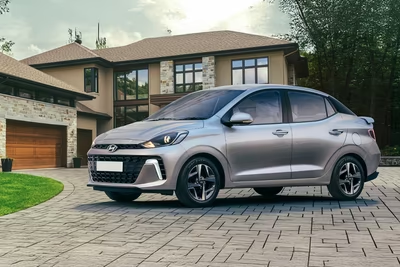
Today, Hyundai India retails 13 models spanning hatchbacks, sedans, SUVs, and electric vehicles, catering to buyers across a wide price spectrum — from the entry-level Grand i10 Nios to the flagship Tucson and the all-electric Ioniq 5.
Strong Sales Network
Hyundai's commercial success in India is underpinned by one of the most extensive dealer networks among non-domestic automakers in the country. The brand operates through over 1,400 sales outlets and more than 1,300 service centres spread across hundreds of cities and towns, ensuring that ownership support reaches well beyond the major metros. This breadth of network has been instrumental in building buyer confidence, particularly among first-time car owners upgrading from two-wheelers who prioritise easy access to after-sales service.
Hyundai retails all its models through a unified Hyundai dealership format, unlike some rivals that split their portfolio across separate premium and mass-market channels. However, the brand draws a clear distinction in its showroom experience and product positioning between its mainstream offerings and its more aspirational models, including its growing electric vehicle range.
Powertrains: Covering Every Fuel Type
Few automakers in India can match the breadth of Hyundai's powertrain portfolio. The brand offers petrol, diesel, CNG, and electric options across its lineup — making it one of the only manufacturers to meaningfully cover every major fuel type currently relevant to Indian buyers.
Its petrol engines range from frugal three-cylinder units in its compact cars to more performance-oriented four-cylinder options in its larger SUVs. Hyundai's diesel engines — particularly the 1.5-litre U2 CRDi unit — remain among the most refined and fuel-efficient in the Indian market and continue to find strong traction in the mid-size and large SUV segments where long-distance driving demands make diesel a practical choice.
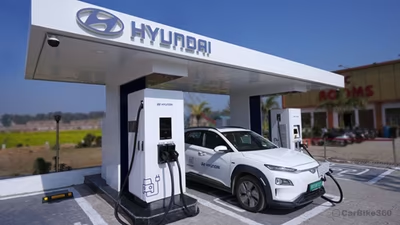
On the electrification front, Hyundai has a clear two-pronged strategy. Its mainstream electric vehicles — led by the Creta Electric, which became one of India's best-selling electric cars upon launch — target the rapidly expanding EV-conscious urban buyer. At the premium end, the Ioniq 5 represents Hyundai's global EV architecture making its way to Indian shores, bringing 800V charging capability and a distinctly futuristic design language. Hyundai is also among the few brands offering CNG variants of its popular models, addressing the high running-cost sensitivity among high-mileage urban commuters.
Design and Features: Setting the Benchmark
If there is one area where Hyundai has consistently punched above its price bracket in India, it is design and features. The brand has historically been the first to introduce segment-defining equipment at accessible price points — from sunroofs and rear air-conditioning vents in the compact SUV space to ventilated front seats, BlueLink connected car technology, and Level 2 ADAS features in the mid-size segment.
Hyundai's design language has also evolved significantly over the years. Its current lineup reflects the brand's global 'Sensuous Sportiness' design philosophy — characterised by bold, sculpted exteriors, wide stance proportions, and premium-looking interiors that often make its vehicles appear positioned a segment above their actual price point. This design premium has been a key factor in Hyundai's ability to command stronger resale values than many of its direct competitors.
The brand's BlueLink connected car platform — available across several models — offers features such as remote engine start, real-time vehicle tracking, geofencing, and over-the-air updates, bringing a level of digital integration that buyers in the ₹10–20 lakh segment increasingly expect.
Manufacturing and Local Presence
Hyundai operates two manufacturing plants in Sriperumbudur, Tamil Nadu, with a combined annual production capacity of approximately 8.24 lakh units. This makes it one of the largest automotive manufacturing operations in India by a foreign automaker. The brand also uses India as a significant export hub, shipping vehicles to over 150 countries — a testament to the quality and competitiveness of its India-made products on a global scale.
In 2023, Hyundai Motor India completed one of the largest initial public offerings (IPOs) in Indian corporate history, listing on the domestic stock exchanges and further cementing its long-term commitment to the Indian market.
Hyundai's Electric Vehicle Ambitions in India
Hyundai's EV ambitions in India are growing rapidly and with clear intent. The Creta Electric, launched in early 2024, became a watershed moment for the brand — demonstrating that an electric SUV at a mainstream price point could generate genuine mass-market demand and not just urban niche interest. The Creta Electric's success validated Hyundai's approach of localising its EV offerings rather than simply importing global models.
Looking ahead, Hyundai has outlined plans to introduce additional electric models in India, with a focus on localising battery packs and key EV components to bring costs down and make electric ownership more accessible to a wider audience. The brand's global investment in EV technology — including its proprietary E-GMP (Electric Global Modular Platform) — means it has a deep well of product and technology to draw from as India's EV market matures.
The Road Ahead
After nearly three decades in India, Hyundai Motor India is no longer simply a foreign carmaker doing well in an emerging market. It is woven into the fabric of Indian automotive culture — a brand that millions of families have grown up with, trusted, and returned to across multiple purchase cycles. The challenge ahead is to maintain that trust while successfully navigating the industry's twin transitions: the shift towards electric mobility and the growing demand for increasingly sophisticated, connected, and feature-rich vehicles.
With a strong product pipeline, a proven manufacturing base, a widening EV portfolio, and one of the most recognised brand names in the country, Hyundai Motor India is well-positioned to defend and extend its standing as India's most influential international automaker for years to come.
Hyundai’s pricing starts at ₹5.60 Lakh for its most affordable model, the Hyundai Grand i10 Nios. On the premium end, prices go up to ₹55.71 Lakh for the Hyundai Ioniq 5, Hyundai’s flagship offering. In between, popular models like the Hyundai Creta start from ₹10.91 Lakh.
On the horizon, Hyundai is set to introduce 12 cars — Hyundai Tucson facelift, Hyundai Exter EV, Hyundai Ioniq 6 — further strengthening its presence in the Indian market.
Hyundai Cars Price List (July 2026) in India
Ex-showroom price of Hyundai cars in New Delhi ranges between ₹5.60 Lakh and ₹55.71 Lakh.
| MODEL | PRICE (Ex-showroom) | AVAILABLE FROM |
|---|---|---|
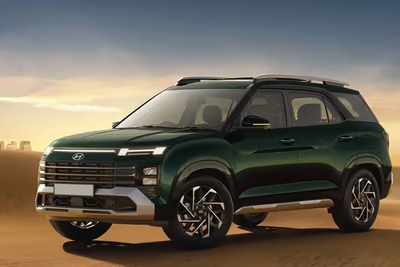
| Hyundai Creta | ₹10.91 Lakh | 16-Jan-2024 |
| Hyundai Venue | ₹8 Lakh | 04-Nov-2025 |
| Hyundai Exter | ₹5.81 Lakh | 20-Mar-2026 |

Hyundai Car Models


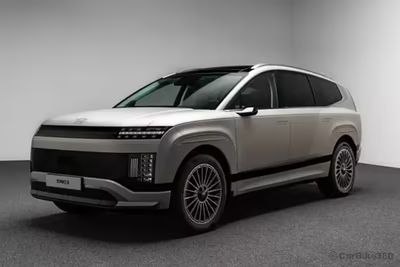
- ✓ E-GMP platform delivers a flat floor, sliding console & spacious lounge-like cabin
- ✓ 3.6 kW V2L function powers laptops, camping gear and home appliances
- ✓ 84 kWh battery pack claims driving range up to 690 km
- ✓ 800V architecture, can charge from 10% to 80% in just 18 minutes.
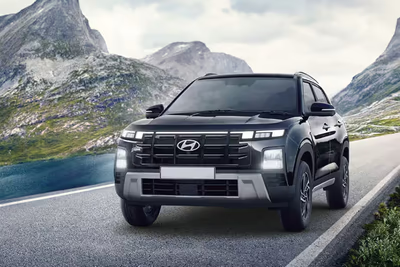
- ✓ Three engines with four gearbox choices
- ✓ Segment's best resale & service network
- ✓ Traction control modes (snow, mud, sand)
- ✓ Twin 10.25" screens & panoramic sunroof

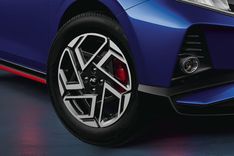
- ✓ R16 Diamond Cut Alloy Wheels
- ✓ BlueLink with remote start & OTA updates
- ✓ Three powertrain options in its segment
- ✓ 5-star NCAP rating

- ✓ 1.2L Kappa Petrol Engine
- ✓ 8-inch HD touchscreen infotainment
- ✓ Dual-cylinder CNG with zero boot loss
- ✓ Sunroof & dashcam at micro-SUV pricing
Upcoming Hyundai Cars


 Notify Me on Launch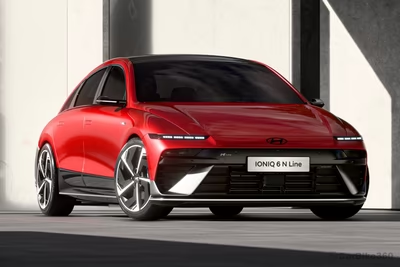

Hyundai cars comparisons
Compare Yourself 
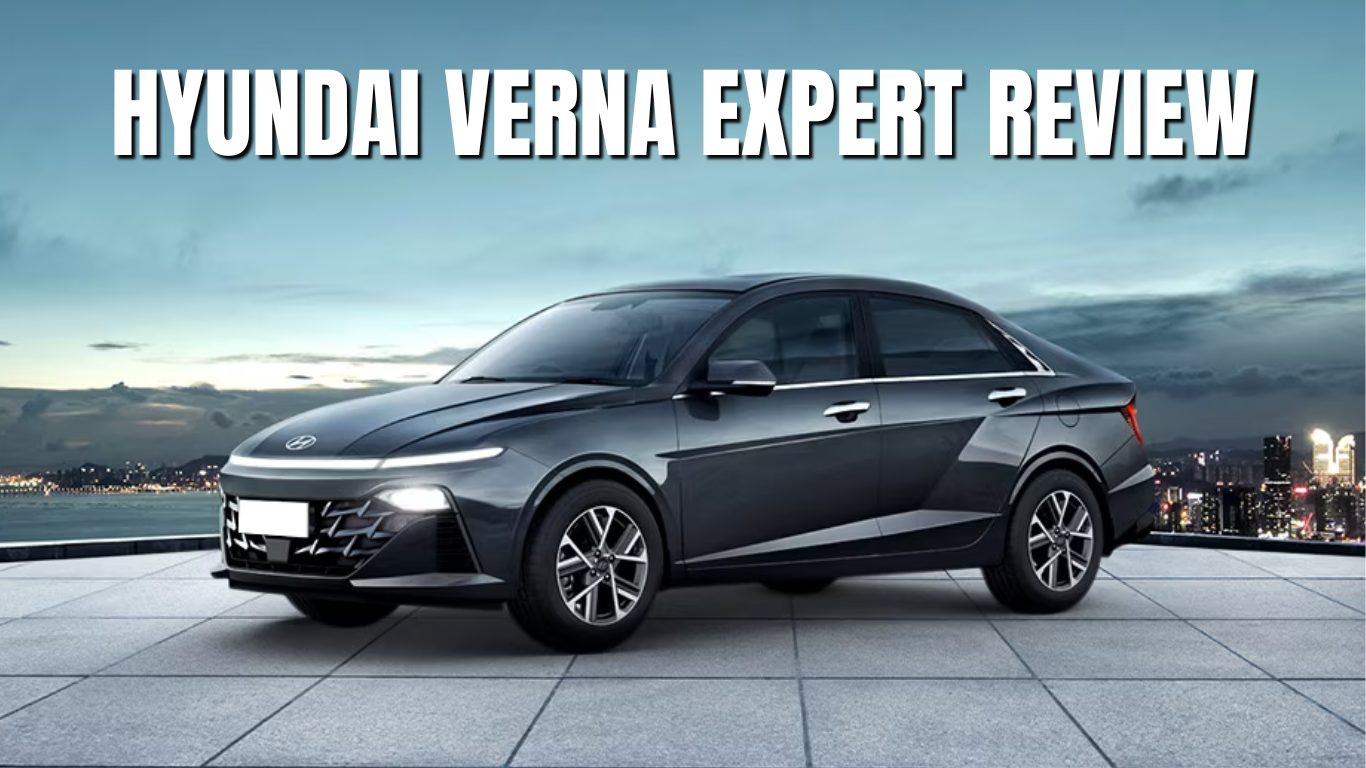
Hyundai Car Expert Reviews
View All Reviews 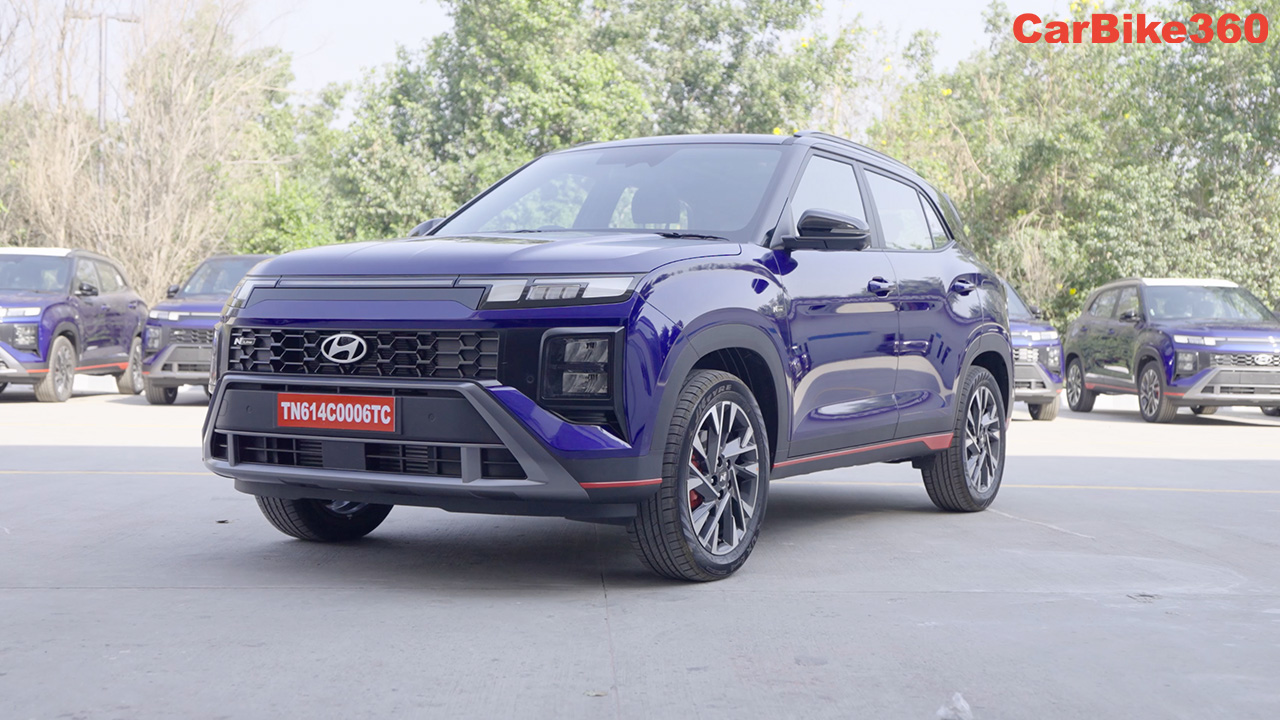
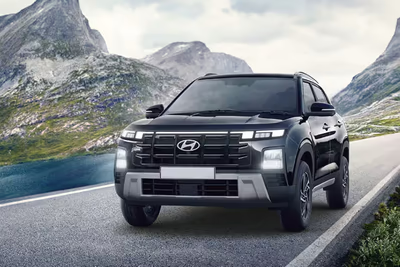
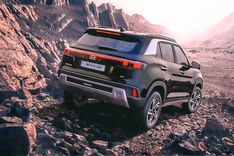
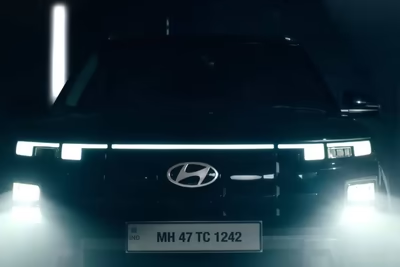
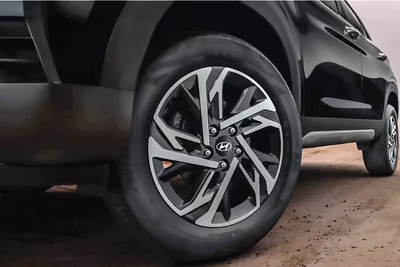
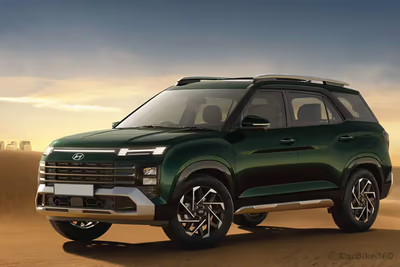
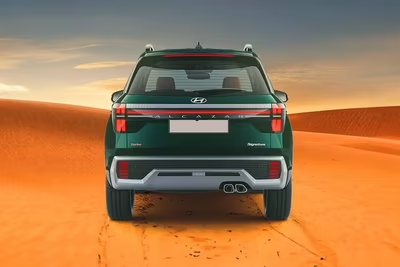
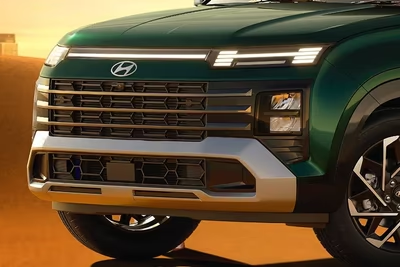
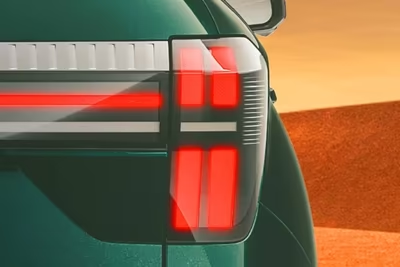
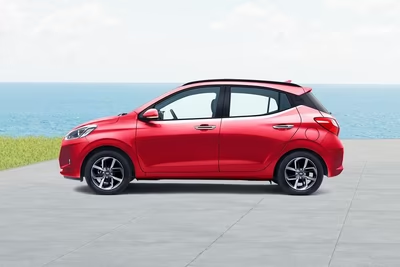
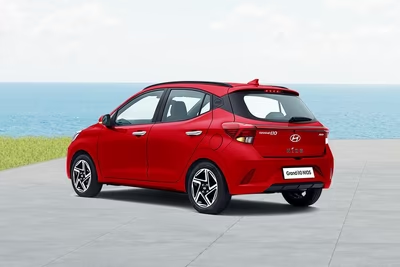
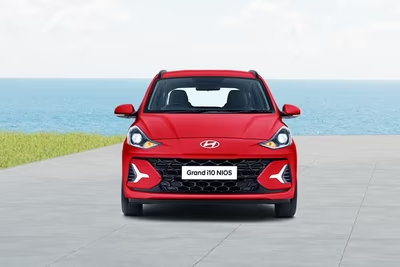
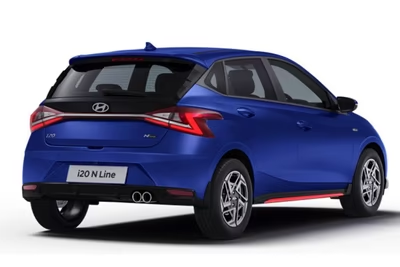
Hyundai Cars Images
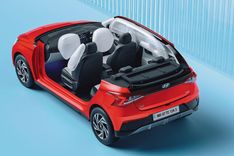
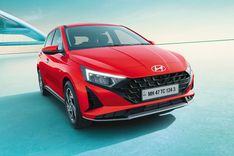
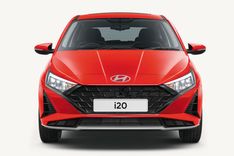
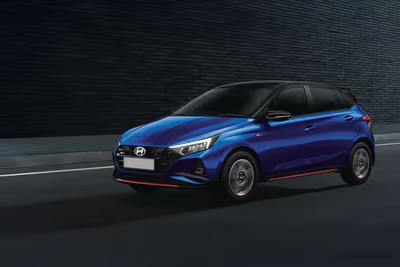
Hyundai cars in News
View All News