ELECTRIC
Mercedes-Benz India Focuses on Premium Positioning Amid Entry-Level Luxury Competition
 Add CarBike360 on Google
Mercedes-Benz India is focusing on premium positioning and long-term customer value, using financing solutions and brand strength to attract buyers as they upgrade, while maintaining pricing discipline and avoiding entry-level price competition.

Apr 09, 2026 12:46 pm IST
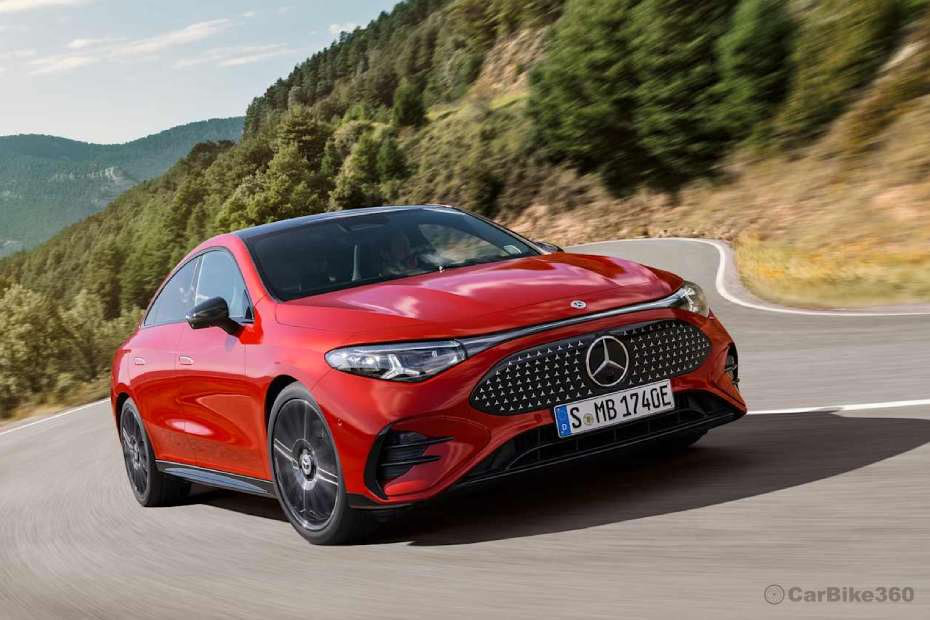
Mercedes-Benz India is maintaining its premium positioning as rivals target entry-level luxury buyers. The company is relying on financing options, brand value, and a focus on long-term customer relationships to capture buyers as they upgrade. While competitors expand the luxury car market with aggressive pricing and accessible products, Mercedes-Benz sees this trend as a structural benefit rather than a threat.
Key Highlights
- Mercedes-Benz India maintains premium positioning as rivals target entry-level luxury buyers
- Company focuses on financing solutions and long-term customer relationships to capture upgrade buyers
- Refuses to engage in price wars and maintains pricing discipline for new models like the CLA EV
- Sees market expansion by competitors as a structural benefit rather than a threat
- Observes more first-time buyers entering directly into core and top-end luxury segments
Strategic Approach to Market Expansion
Managing Director Santosh Iyer stated that Mercedes-Benz welcomes efforts to grow the entry segment, as it helps bring new customers into the luxury market. Unlike competitors who focus on increasing sales volumes, Mercedes-Benz aims to capture value over time. The company believes the real opportunity lies in the upgrade cycle, as first-time luxury buyers mature and seek higher-end vehicles.
This strategy aligns with the brand’s global approach. As buyers’ aspirations and purchasing power grow, Mercedes-Benz expects them to move towards its core and top-end models. Iyer emphasized the company's confidence that these customers will eventually choose Mercedes-Benz for their next purchase.
Financing and Pricing Discipline
Mercedes-Benz is leveraging structured financial solutions to improve accessibility without compromising its premium image. The company offers lower EMIs, residual value guarantees, and strong support for pre-owned vehicles. These measures aim to make ownership more affordable, focusing on total ownership cost rather than just the purchase price.
Iyer highlighted the importance of financing, noting the company’s NBFC-backed ecosystem. This allows even higher-end vehicles to be within reach of first-time luxury buyers. Mercedes-Benz refuses to engage in price wars, maintaining pricing discipline even in competitive segments. For example, the upcoming CLA EV will be priced around ₹60 lakh, above the sub-₹50 lakh offerings from competitors.
Changing Consumer Behavior
The company observes a shift in buyer profiles. Increasingly, first-time luxury car buyers are entering directly into core and top-end segments, bypassing entry-level models. Iyer noted that this trend reduces the need to compete aggressively at the entry level.
Competitive Landscape and Market Share
Recently, BMW Group India surpassed Mercedes-Benz in quarterly sales for the first time in over a decade, based on Vahan retail registrations. However, Mercedes-Benz retains its lead for the full FY26. The company remains committed to its strategy, focusing on sustainable growth, customer experience, and long-term desirability rather than short-term market share gains.
Mercedes-Benz India’s approach centers on capturing the most valuable segment of the market—buyers seeking desirability and sustainability over volume. The company aims to win the upgrade cycle, not the entry-level battle.


You May Like




Find your perfect car

Budget

Brand

Body Type

Fuel

Mileage

More
Latest Car Videos




Other Car News
Listen to Car Audios