ELECTRIC
Physical Buttons Return as Car Safety Rules Target Touchscreen Controls
 Add CarBike360 on Google
Euro NCAP will require physical buttons for essential car functions from January 2026, prompting manufacturers to reintroduce tactile controls. This shift aims to address safety and usability concerns raised by touchscreen-heavy interiors.

May 13, 2026 06:35 am IST
Automotive interiors have become more complex as manufacturers add advanced technology. However, concerns about usability and driver distraction are rising. Many drivers find it difficult to perform simple tasks, such as adjusting the air conditioning, due to touch-heavy controls. Instead of turning a knob, drivers often navigate deep touchscreen menus, which can be distracting and unsafe.
Key Highlights
- Euro NCAP will require physical buttons for key functions from January 2026
- Manufacturers like Maruti Suzuki and Mahindra retain physical controls for usability
- Luxury brands including Mercedes-Benz and Audi reintroduce tactile controls
- Touchscreen controls have raised concerns about driver distraction and safety
New Safety Rules Impact Car Interiors
Euro NCAP, a leading authority on vehicle safety ratings, has introduced a significant rule. Starting January 2026, cars must have physical buttons for essential functions to achieve a five-star safety rating. This includes controls for indicators, wipers, horn, and hazard lights. Manufacturers can no longer hide these features inside touchscreens or touch-sensitive panels. This change responds to long-standing complaints that touchscreens distract drivers.
Manufacturers have favored screens because they are less expensive than multiple physical switches and create a modern appearance. However, in real-world conditions, such as driving at night or in poor weather, touchscreens can hinder quick access to important controls. The new rule aims to improve safety by making essential features easier to use without taking eyes off the road.
Manufacturers Respond to Usability Concerns
Maruti Suzuki and Mahindra Approaches
Some manufacturers have already begun to address these concerns. Maruti Suzuki, for example, kept physical switches for climate control in the e-Vitara, an electric vehicle launched earlier this year. This decision reflects an understanding of customer needs for reliable, easy-to-use controls.
Mahindra has also maintained tactile buttons for frequently used features in the XUV 3XO. While the interior may appear busier than those with large touchscreens, drivers can operate key functions without looking away from the road.
Industry Trends and Luxury Brands
Glossy-black touch panels, which provide haptic feedback, have become a common feature but often receive criticism. These panels attract fingerprints, create glare in sunlight, and lack the tactile feedback of traditional buttons. In response, luxury brands like Mercedes-Benz and Audi have started reintroducing physical rollers on steering wheels. Owners reported accidental changes to settings when using touch-sensitive controls.
By 2026, cars with rows of solid, metallic buttons may be seen as more premium than those with only large touchscreens. Physical buttons demonstrate a focus on driver attention and usability. The best technology supports the driver without demanding constant visual attention.
Industry Shifts Toward Usability
The automotive industry is not moving away from technology but is shifting toward better usability. Manufacturers are responding to feedback and new regulations by reintroducing physical controls for essential functions. This trend aims to balance technological advancement with driver safety and convenience.


You May Like


Find your perfect car

Budget

Brand

Body Type

Fuel

Mileage

More
Latest Car Videos


Top Auto News of the Week: Tata Sierra EV, BMW X6, E85 Fuel & More - Weekly Wrap

Top Auto News of the Week | Hyundai i20 Leak, Honda ZR-V, Tata Sierra EV, Skoda EV & More!
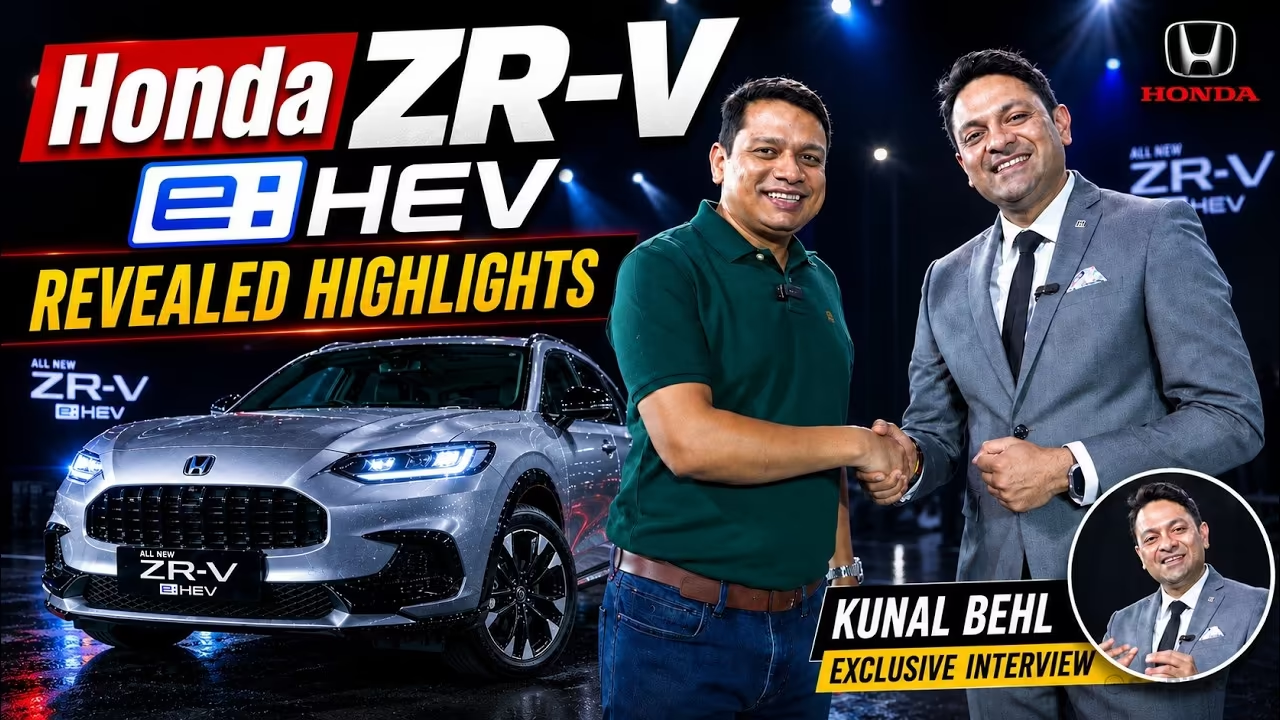
Talking about new Honda City and upcoming ZR-V SUV with Honda India’s Kunal Bahl!
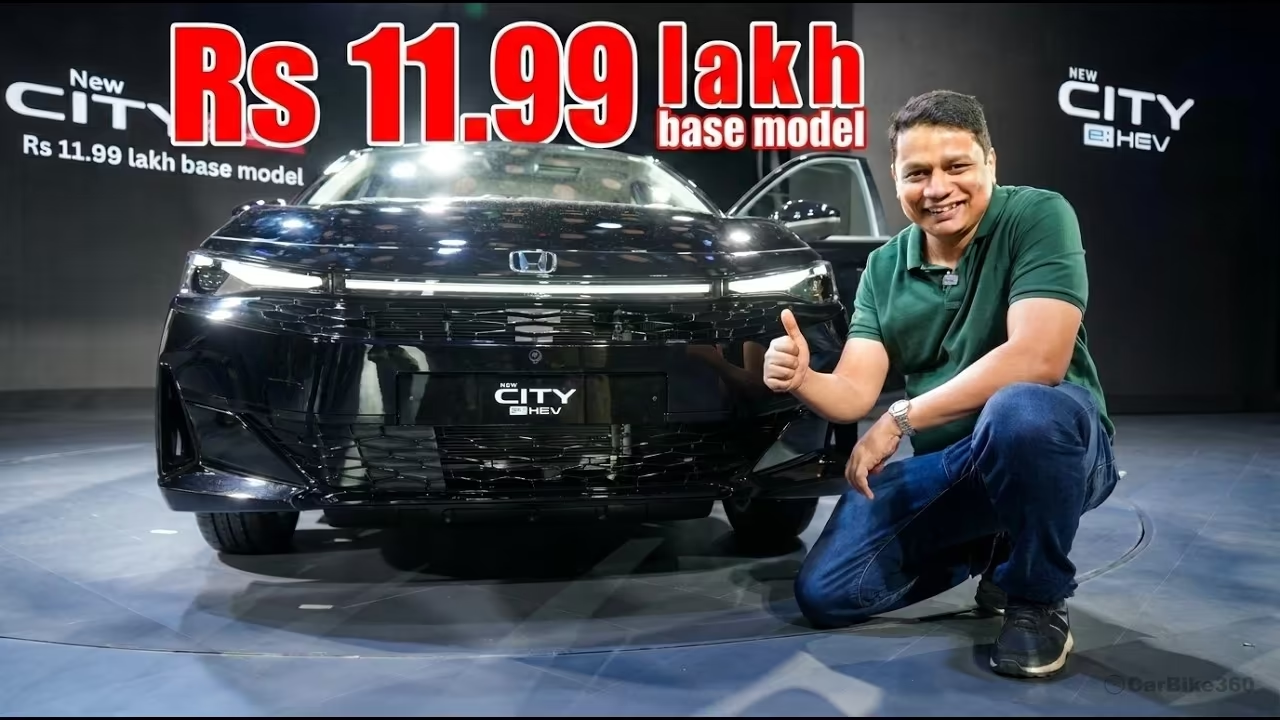
2026 Honda City Launched in India - Better than VW Virtus, Hyundai Verna & Skoda Slavia?
Other Car News
BMW unveils fifth-generation X5 with five powertrain options and 845 km range
Government clarifies E20 fuel policy, not an experiment amid media reports
Maruti Suzuki reecords 19.3% sales growth in June 2026, surpassing 2 lakh units
Kia strengthens Seltos lineup with new GTX(O) and X-Line(O) top trims in India
Listen to Car Audios