ELECTRIC
Volkswagen group plans to halve global model line up and reduce production by 2030
 Add CarBike360 on Google
Volkswagen Group is reshaping its global strategy by cutting its model range and production output, aiming for streamlined operations and a stronger push toward electric vehicles by the end of the decade.

By Rohan Verma
Jul 13, 2026 10:54 am IST
The Volkswagen Group will reduce its global model line-up by up to 50 percent by 2030 as part of a major business restructuring. The Group also plans to cut the number of variant options across its portfolio by up to 75 percent and lower production capacity. These changes aim to reduce costs and simplify operations.
Key Highlights
- Volkswagen Group will cut global model line-up by up to 50 percent by 2030.
- Variant options across the portfolio will be reduced by up to 75 percent.
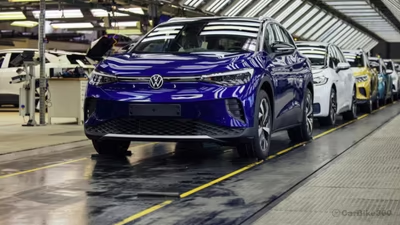
- Annual production capacity will decrease to around 9 million vehicles.
- Restructuring may lead to up to 100000 job cuts and possible plant closures.
Major Portfolio and Production Changes
Volkswagen has not specified which models will be discontinued. The company will focus on the most attractive market segments, streamlining its model line-up by up to half. The Group's portfolio currently includes Volkswagen, Skoda, Seat, Cupra, Audi, Porsche, Bentley, and Lamborghini, among other brands.
Volkswagen targets a 75 percent reduction in offering complexity, which includes equipment options across its models. This move will help the company focus investment and development on products that provide the highest value for customers and the Group.
The Group will also reduce the number of platforms and electronic architectures used across its brands. Volkswagen aims to increase the use of common technologies with high scaling potential. Annual production capacity will be reduced to around 9 million vehicles. Before the Covid-19 pandemic, Volkswagen had capacity for about 12 million vehicles annually and has already reduced this by 2 million units. Further reductions are planned in Europe and China.
Restructuring Driven by Market Pressures
The restructuring comes as Volkswagen faces rising competition from Chinese carmakers, regulatory pressures, tariffs, and geopolitical tensions. These challenges have contributed to the Group's profits falling by about half since 2021.
The company has outlined 12 initiatives to be implemented by 2030. CEO Oliver Blume stated that Volkswagen aims to become faster, more resilient, and more competitive by reducing complexity and aligning products, development, and production with regional markets.
Workforce and factory reductions may result from the restructuring. Around 50,000 job cuts had already been outlined under earlier measures. Reports suggest Volkswagen could increase planned workforce reductions to a total of 100,000 jobs and close four plants in Germany. The plants reportedly under consideration for closure are Hanover, Emden, Zwickau, and Audi's Neckarsulm facility. The Group has not confirmed further job cuts or factory closures, and it remains unclear if the sites would close or be sold.
Volkswagen has not provided details about which specific models or plants will be affected by the changes. The company will continue to monitor market conditions as it implements its restructuring plan through 2030.
CarBike 360 Says
Volkswagen Group’s decision to streamline its model portfolio and reduce production marks a decisive shift toward efficiency and future readiness. By focusing on fewer, more competitive models and accelerating its electric transition, the company aims to strengthen profitability while adapting to evolving global demand and stricter regulatory landscapes in the coming decade.


You May Like


Find your perfect car

Budget

Brand

Body Type

Fuel

Mileage

More
Latest Car Videos



Other Car News
Listen to Car Audios