

 ELECTRIC
Why does Electric Vehicle charging slow down in winter | Does it affect the range?
 Add CarBike360 on Google
Have you wondered why Electric vehicle becomes less efficient in winter or cold weather?

By Mohit Kumar
Mar 27, 2023 10:17 pm IST
Published On
Jan 30, 2023 12:05 pm IST
Last Updated On
Mar 27, 2023 10:17 pm IST
Have you ever thought about it? If yes, does it worry you when purchasing an electric car or any EV? Well, it’s true that the charging nature of EV batteries gets affected by the temperature.
Marshall Shephard an atmospheric scientist has addressed this issue in one of the Forbes articles. “He said that it’s real but not a major hurdle that will stop you to buy any Electric vehicle”.
So let’s understand first how climatic condition affects an electric vehicle then we go a little further inside the battery.
Does it affect the range?
In layman's language, electric vehicles work similarly to a human. As we don’t like cold temperatures or get sluggish in winter. The same thing happens to your electric car.
Your EV also feel comfortable at room temperature around 21 degrees Celsius (70 degrees Fahrenheit).
The study discovered that when the temperature dropped, charging times considerably increased.
A DCFC charger could charge an EV battery to 80% of its capacity in 30 minutes when it was charged at 77 degrees.
However, after the same amount of time at 32 degrees, the battery's state of charge was 36% lower.
So you can see clearly that it cost more to charge, so you will have to wait a little longer. In case you are in hurry then you will have to compromise with the range. But don’t think charging your battery full will give you a normal range that you get at room temperature.
According to research, there is a 12 per cent of decrease in the range in winter or cold climatic conditions.
What happens inside the battery at low temperatures?
The batteries used in electric vehicles are lithium-ion type. Let's understand some chemistry concepts behind this lithium-ion battery. Don’t worry it’s not that boring.
According to Recurrent, cold weather decreases conductivity and diffusivity—two physical and chemical processes crucial to the operation of electric car batteries.
At cold temperatures, when lithium ions flow from the anode to the cathode of the battery to create an electric current inside it faces resistance. That leads the battery to be inefficient.
Longer charging time (increased impedance)
The range is often temporarily get reduced, often because of heating systems. The use of climate control can deplete the primary battery's charge because the power for heating and cooling your automobile comes from the same battery that powers the vehicle.
What you should do to get optimum output?
Even though range reductions caused by the cold are only momentary, it is nevertheless recommended that your battery is above freezing before charging.
The battery management system (BMS) in the majority of vehicles does feature some type of temperature regulation that will stop high voltage or quick charging if the battery is too cold.
One thing is the range. Charges are a very different matter. As ions move more slowly through battery cells in colder temperatures, lithium builds up outside the node and transforms into an inert metal.
This lithium plating interferes with the energy flow in the future and consumes some of the lithium that is meant to power the battery, which might reduce power and range.
If you're interested in more information, Recurrent claims that battery anodes are constructed of substances with lattice-like structures, such as graphite. Lithium ions migrate from the cathode to the anode and are stored in the lattice spaces during a battery's charging process.
The ions reach the anode more slowly when charging outside in cold weather, and the accumulation of lithium outside can lead to metallic plating.
While some of these ions will eventually enter the anode, others will stay plated outside, permanently decreasing capacity and raising internal battery resistance.
In most electric vehicles, the computer will warm up the battery and reduce charging speed until it is secure. This is advantageous, but unless the car is plugged in a while preheating, it also reduces range.
On the other hand, Recurrent claims that you may use a lithium-ion battery that has already been charged without concern even when it is extremely cold.
In cold temperatures, ion flow gets disturbed and does not flow smoothly. So for the short term, you will face issues in range but don’t worry it will not affect you in long term.
Why do Tesla cars perform comparatively well even in cold temperatures?
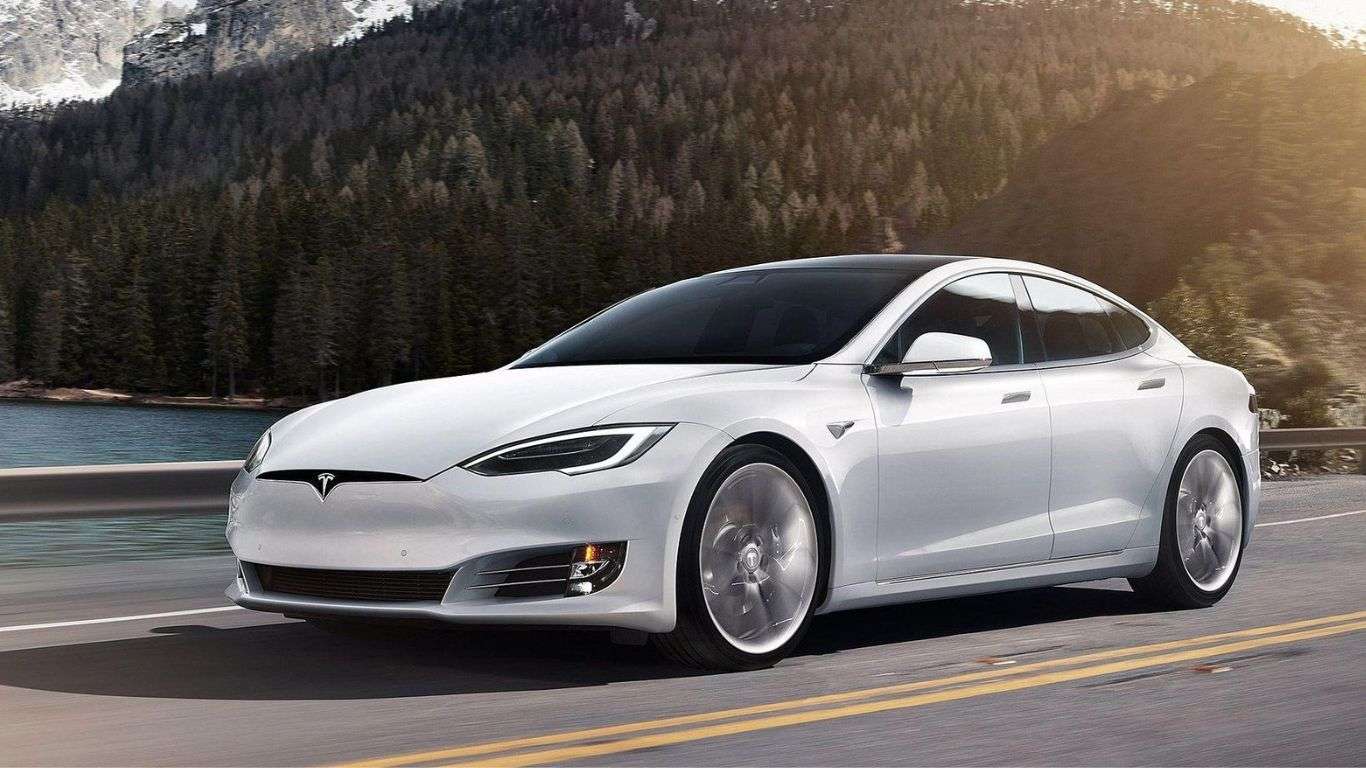
Although all EV batteries are covered by the research on this page, Tesla cars have a few specific features that make them stand out of them.
Tesla regulates these impacts very tightly and frequently does not make them visible to the driver, i.e. the dashboard range frequently does not reflect temperature effects, even though their batteries are not immune to temperature effects.
Tesla uses two techniques for this. First, they warm the battery in the winter and cool it in the summer using a powerful thermal management system to maintain the battery within a healthy operating temperature range.
Second, Tesla uses a fixed efficiency number to determine onboard range rather than a dynamic value based on environmental variables.
As a result, even though Tesla drivers are aware that range estimates might vary significantly depending on the temperature, they almost remain the same.
Conclusion
If you have a home charger and want to improve then, a Level 2 EVSE unit will not only charge faster than a regular Level 1 charger, but cars left plugged in when not in use can maintain their battery temperature, reducing less strain on the battery to warm up when first utilised.


You May Like


Find your perfect car

Budget

Brand

Body Type

Fuel

Mileage

More
Latest Videos





Other News

BYD to Launch Plug-in Hybrid SUVs in India: Sealion 6 and Leopard 8 Expected

Haryana invites VinFast to set up EV manufacturing plant amid rising auto investments

Spark Minda reports record FY26 revenue, strengthens EV technology partnerships

Bosch eyes strong growth in India amid new automotive regulations and tech push
Listen to Audios

Vihan AI - Your Car assistant
Ask me anything about cars, prices, and comparisons.