ELECTRIC
Diesel passenger vehicles gain market share in India amid rising SUV demand
 Add CarBike360 on Google
India’s passenger vehicle market is seeing a shift as diesel-powered SUVs gain traction. Buyers are favouring fuel efficiency, high torque, and long-distance capability, contributing to a steady rise in the diesel vehicle market share.

By Rohan Verma
Jul 23, 2026 12:01 pm IST

Diesel-powered passenger vehicles have increased their market share in India after several years of decline. This growth is driven by strong demand for SUVs, lower running costs, and renewed consumer interest in diesel. According to Vahan and the Federation of Automobile Dealers Associations (FADA), diesel vehicles made up 19.39% of passenger vehicle registrations so far in FY27. This is an increase from 18.08% in FY26.
Key Highlights
- Diesel vehicles reached 19.39 percent of passenger vehicle registrations in FY27, up from 18.08 percent in FY26.
- Average monthly diesel registrations increased by nearly 15 percent to about 82000 units in FY27.
- SUV demand and rising petrol prices are key factors driving renewed interest in diesel vehicles.
- Automakers like Tata Motors and Mercedes-Benz report steady or rising diesel demand in India.
- Government explores isobutanol blending for diesel as E20 petrol is implemented nationwide.
Average monthly registrations of diesel vehicles have also grown by nearly 15%. The number has risen to about 82,000 units, up from around 71,400 units in the previous financial year. Industry executives say this trend is due to several factors rather than one main reason.
Factors Driving Diesel Demand
The popularity of mid-size and full-size SUVs is a major reason for the rise in diesel sales. Diesel engines remain widely available in these segments. Rising petrol prices have also made diesel vehicles more attractive, especially for buyers who drive long distances each year.
Some dealers report that customers are considering diesel models because of concerns about using E20 petrol in older vehicles or those not compatible with E20 fuel. However, manufacturers have not identified ethanol-blended petrol as the main reason for the recent increase in diesel demand.
Automaker Perspectives and Market Trends
Shailesh Chandra, Managing Director of Tata Motors Passenger Vehicles and Tata Passenger Electric Mobility, said the company has seen growing demand for diesel models in recent years. This is especially true in the SUV segment around the Rs. 15 lakh price range. He noted that while diesel demand has increased, Tata Motors’ main growth has come from CNG and electric vehicles, while petrol vehicle volumes have declined.
Mercedes-Benz India has also reported steady demand for diesel models. According to Managing Director and CEO Santosh Iyer, diesel accounts for about 40% of the company’s sales in India. He explained that customers mainly consider the total cost of ownership when choosing a powertrain. Rising petrol prices have pushed some buyers toward diesel and electric vehicles.
New Diesel SUV Launches and Policy Developments
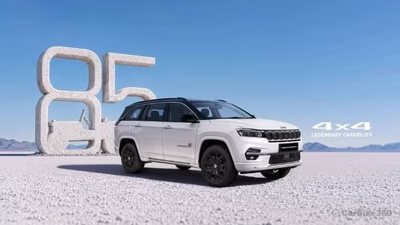
The launch of new diesel-powered SUVs has helped keep diesel relevant in the market. In the past two years, manufacturers have introduced or updated diesel variants of several popular models. These include the Mahindra XUV 3XO and Thar Roxx, Tata Curvv, Harrier and Safari, Hyundai Creta and Alcazar, Kia Seltos, Syros and Carnival, Jeep Meridian, and MG Majestor.
The government’s biofuel policy is also changing. E20 petrol has been rolled out nationwide, but diesel is not yet part of the ethanol blending programme. Instead, the government is considering isobutanol as an alternative biofuel for diesel engines, with blending levels up to 15% being discussed for future energy plans.
The recent rise in diesel registrations shows that diesel remains important in vehicle segments where torque, long-distance efficiency, and operating costs are key factors. This is true even as the broader market gradually shifts toward electrification and alternative fuels.
Also Read: Car insurance exclusions for racing and off-road events explained
CarBike 360 Says
The resurgence of diesel passenger vehicles in India reflects evolving buyer preferences, particularly in the SUV segment where torque and efficiency remain key priorities. As automakers continue refining diesel technology to meet emission norms, the fuel type is likely to retain relevance. Moving forward, diesel’s growth will hinge on regulatory clarity, fuel pricing, and sustained demand for utility-focused vehicles.


You May Like



Find your perfect car

Budget

Brand

Body Type

Fuel

Mileage

More
Latest Car Videos




Other Car News

Listen to Car Audios