ELECTRIC
Toyota Lexus LM 350h Receives India’s First WLTP Compliance Certificate from ARAI
 Add CarBike360 on Google
Toyota Kirloskar Motor has become the first automaker in India to receive a WLTP compliance certificate from ARAI for the Lexus LM 350h, ahead of the April 2027 deadline for mandatory WLTP standards for passenger vehicles.

May 11, 2026 09:01 am IST

Toyota Kirloskar Motor has received India’s first WLTP compliance certificate for the Lexus LM 350h and its variants. The Automotive Research Association of India (ARAI) issued the certificate under AIS:175. This milestone comes about a year before WLTP compliance becomes mandatory for M1 and M2 category vehicles in India. These categories include passenger cars, commercial passenger buses, and vans with a gross weight under 5 tonnes. The regulation will take effect from April 1, 2027.
Key Highlights
- Toyota Kirloskar Motor receives India’s first WLTP compliance certificate for Lexus LM 350h
- WLTP compliance will be mandatory in India for M1 and M2 vehicles from April 1 2027
- WLTP replaces the older MIDC system to improve accuracy of emissions and efficiency data
- Certification aligns Indian vehicle testing standards with international norms
Certification Details and Significance
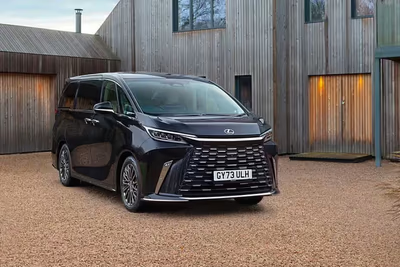
Toyota Kirloskar Motor voluntarily pursued WLTP certification ahead of the regulatory deadline. This move makes it the first automaker in India to comply with the upcoming standard. Dr. Reji Mathai, Director at ARAI, formally presented the certificate to Abhay Kulkarni, General Manager at Toyota Kirloskar Motor, during a dedicated programme. The Lexus LM 350h is a hybrid luxury MPV sold under Toyota’s Lexus brand.
ARAI stated that this certification is a significant step toward implementing globally harmonized vehicle testing standards in India. The WLTP, or Worldwide Harmonized Light Duty Test Procedure, is a global standard for measuring fuel consumption, energy consumption, and exhaust emissions. The United Nations Economic Commission for Europe (UNECE) developed this system, which is already in use in Europe, Japan, and South Korea.
WLTP and Its Impact on Indian Standards
WLTP will replace the Modified Indian Driving Cycle (MIDC), which has faced criticism for not reflecting real-world driving conditions. The WLTP uses a more dynamic test cycle and considers factors such as optional equipment, vehicle weight, and aerodynamics. This approach aims to provide more accurate and comparable data on vehicle efficiency and emissions.
India’s adoption of WLTP under AIS:175 will align local testing standards with international norms. This change is expected to improve the accuracy and comparability of data on fuel and energy consumption, as well as exhaust emissions. With the April 2027 deadline approaching, other manufacturers are likely to begin WLTP compliance processes for their vehicle portfolios.
The certification of the Lexus LM 350h marks a key development in India’s automotive regulatory landscape. It signals a shift towards more rigorous and globally accepted testing procedures for vehicles sold in the country.


You May Like





Find your perfect car

Budget

Brand

Body Type

Fuel

Mileage

More
Latest Car Videos


Top Auto News of the Week: Tata Sierra EV, BMW X6, E85 Fuel & More - Weekly Wrap

Top Auto News of the Week | Hyundai i20 Leak, Honda ZR-V, Tata Sierra EV, Skoda EV & More!

Talking about new Honda City and upcoming ZR-V SUV with Honda India’s Kunal Bahl!

2026 Honda City Launched in India - Better than VW Virtus, Hyundai Verna & Skoda Slavia?
Other Car News


Listen to Car Audios