ELECTRIC
Tata Motors leads India electric car market surge in Q1 FY27
 Add CarBike360 on Google
India’s EV market saw strong momentum in Q1 FY27, with Tata Motors maintaining its leadership as overall electric car sales surged significantly.

Jul 01, 2026 10:14 am IST
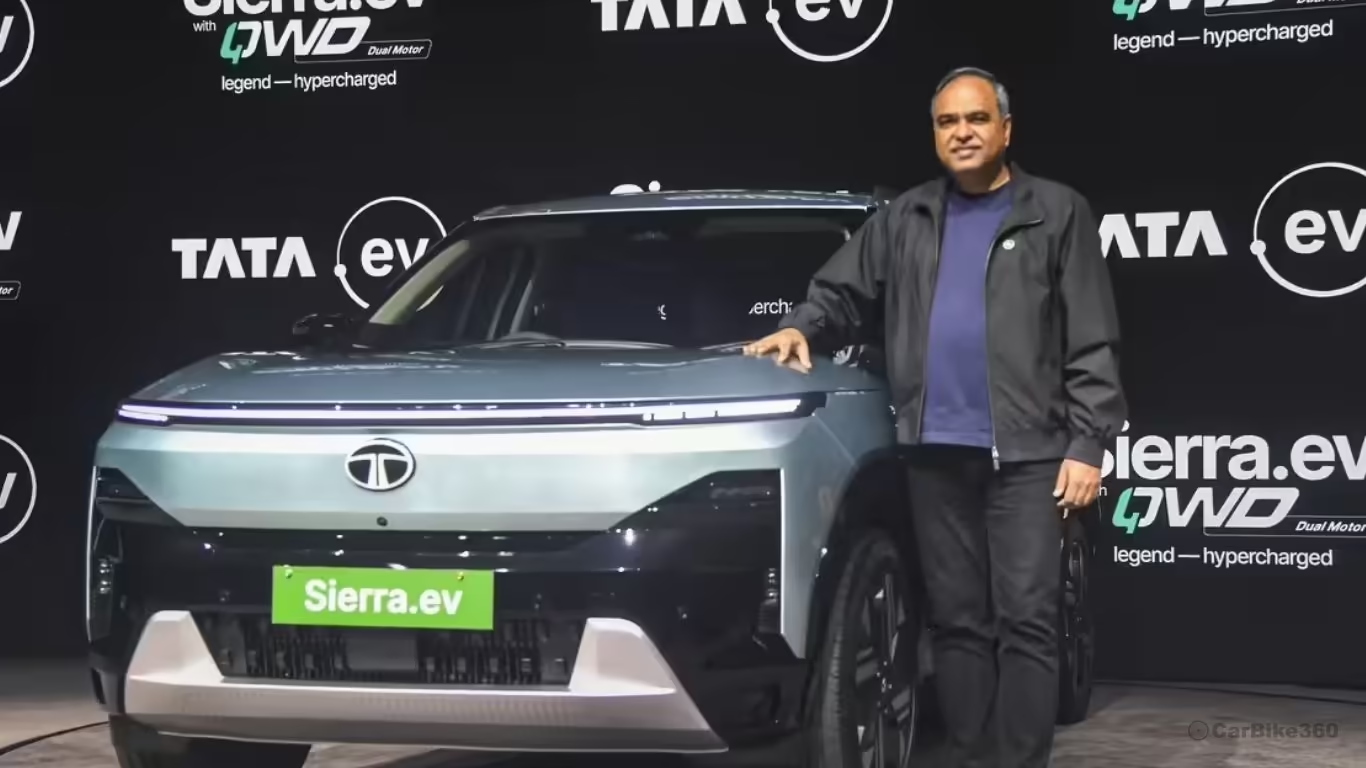
India's electric passenger vehicle market nearly doubled in the first quarter of FY27, with Tata Motors maintaining its lead. Retail registrations rose 89.3 per cent to 82,737 units in April-June 2026, up from 43,710 units in the same period last year, according to Vahan data. Monthly registrations increased from 24,963 units in April to 27,320 units in May and 30,454 units in June. The industry averaged about 27,600 electric-car registrations a month during the quarter, matching Tata Motors’ estimate of 27,000-28,000 units.
Key Highlights
- Electric passenger vehicle registrations rose 89.3 percent to 82,737 units in Q1 FY27.
- Tata Motors led with 32,283 registrations and a 39 percent market share.
- Electric car penetration is expected to reach 7.5-8 percent by the end of FY27.
- Supply constraints limit Tata Motors' ability to meet rising demand.
- Tata Motors targets 10 electric models and over 30 percent EV mix by FY31.
Market Share and Growth Trends
Tata Motors registered 32,283 electric passenger vehicles in Q1 FY27, more than double the 15,794 units from the previous year. The company held a 39 per cent share of the electric passenger vehicle market. followed by 20,112 registrations of Mahindra and Mahindra, almost twice its year-ago volume of 10,144 units, and a 24.3 percent market share.
JSW MG Motor India recorded 16,502 units, up from 13,499 units in Q1 FY '26, giving it a 19.9 percent share. Together, Tata Motors, Mahindra, and JSW MG Motor accounted for over 83 percent of electric passenger vehicle registrations in the quarter.
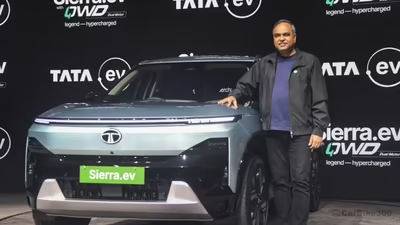
Electric-car penetration in India rose from around 2.5 per cent in FY25 to 4.5 per cent in FY26. Tata Motors Passenger Vehicles Managing Director and CEO Shailesh Chandra expects penetration to reach 6.5-7 per cent in Q1 FY27 and approach 7.5-8 per cent by the end of FY27. He projects that if the market exits FY27 at about 8 per cent, penetration could exceed 10 per cent in FY28.
Factors Driving Demand
Chandra noted that the electric passenger vehicle market is expanding beyond early adopters. More models, improved range, lower acquisition costs, and lifetime battery warranties have reduced barriers, especially in lower-priced segments. Higher fuel prices, influenced by the West Asia crisis, have also increased interest in electric vehicles. Chandra said the market has shifted from a “push mode” to a “pull mode” as customers become more confident in electric technology and more manufacturers enter the space.
FY26 saw record growth, with electric passenger vehicle registrations rising 83.6 percent to 199,923 units, up from 108,873 units in FY25, according to the Federation of Automobile Dealers Associations. The overall passenger vehicle industry achieved its highest-ever domestic wholesale of 46.43 lakh units in FY26, a 7.9 percent increase from the previous year. SIAM reported that electric passenger vehicle registrations grew by over 80 percent, supporting overall industry growth.
Supply Constraints and Expansion Plans
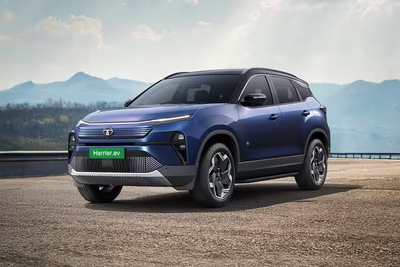
Despite strong demand, Tata Motors faces supply constraints across its electric vehicle supply chain. Chandra stated the demand for the Harrier EV is about twice the available supply. Demand for the updated Punch EV has increased six to seven times, while supply has only grown by 2.5 to three times. The company must allocate common components, such as battery cells and power electronics, across its electric portfolio, balancing supplies between entry-level and premium models. Supplier constraints and long lead times for certain parts have also limited production.
Tata Motors is addressing these issues by working with alternative suppliers, expanding existing factories, and planning capacity enhancements over the next 12, 24, and 36 months. The company aims to reach an annual passenger vehicle capacity of 1.3 million units. Currently, Tata Motors produces about 60,000-65,000 passenger vehicles a month and aims to stabilize output at around 70,000 units. Electric vehicles are expected to make up a significant part of this increase.
Also Read: 2026 Tata Sierra EV launched in India at Rs 18.79 lakh with modern features
CarBike 360 Says
India’s electric vehicle market is clearly entering a high-growth phase, with Tata Motors continuing to set the pace through strong product positioning and expanding demand. As competition intensifies and infrastructure improves, the coming quarters will be crucial in shaping market dynamics, but current trends firmly signal a robust and accelerating shift toward electric mobility in the country.


You May Like


Find your perfect car

Budget

Brand

Body Type

Fuel

Mileage

More
Latest Car Videos


Top Auto News of the Week: Tata Sierra EV, BMW X6, E85 Fuel & More - Weekly Wrap

Top Auto News of the Week | Hyundai i20 Leak, Honda ZR-V, Tata Sierra EV, Skoda EV & More!

Talking about new Honda City and upcoming ZR-V SUV with Honda India’s Kunal Bahl!

2026 Honda City Launched in India - Better than VW Virtus, Hyundai Verna & Skoda Slavia?
Other Car News
Listen to Car Audios