ELECTRIC
IRDAI Revamps Bike Insurance Norms: What Riders Must Know About New Rules & Looming Premium Hikes
 Add CarBike360 on Google
IRDAI has rolled out significant changes to two-wheeler insurance. Discover how new rules, documentation requirements, and potential premium hikes will affect your ride.

By Utsav Chaudhary
Oct 27, 2025 06:29 am IST
Published On
Oct 27, 2025 06:29 am IST
Last Updated On
Oct 27, 2025 06:29 am IST

Bike owners across India are now facing a major shift in their insurance policies as the IRDAI, the country's insurance regulator, rolls out updated norms for two-wheeler coverage. These critical new rules, which come into effect immediately, bring significant changes to how bike insurance works, directly impacting premiums and policy structures. Riders must quickly grasp these revisions, as many could see their insurance costs rise, making it essential to know what is changing and how it affects their wallets. This move by IRDAI aims to streamline the insurance landscape. Its immediate effect will be on the pockets of millions of bike enthusiasts nationwide.
Understanding Bike Insurance Changes
Get ready, riders! The world of bike insurance in India is seeing some essential changes, thanks to new rules from the Insurance Regulatory and Development Authority of India (IRDAI). These updates are set to change how riders buy and use their bike insurance, with a focus on standardizing coverage and making sure more bikes are insured. Whether you ride a scooter or a powerful motorbike, understanding these new rules is key to staying protected on the roads. Riders need to know how these changes might affect their wallets and paperwork. Claims in the coming days.
Why These New Rules Are Coming
The main reason for these big changes is the financial pressure that insurance companies have been feeling. For the past four years, the money collected from third-party bike insurance premiums has stayed mostly the same, even with small adjustments in 2022 and 2023. But, during this time, the costs for medical treatments and legal payments to accident victims. Vehicle repairs have gone up a lot. This situation has led to insurance companies paying out almost as much, or even more, in claims than they collect in premiums.
This imbalance has put a lot of pressure on the financial health of general insurance providers, making a premium increase necessary. For example, in 2024-2025, two-wheeler insurance claims in India went up by 15%, with another rise of 10-12% expected in 2025-2026. Mid-segment motorcycles (150 cc to 350 cc) were a big part of this increase. Even electric vehicles, though a smaller part of the market, are adding to higher claim costs, with their claims being more frequent and repairs costing more due to battery issues. IRDAI, which sets the rates for third-party bike insurance, looks at these claim numbers and loss ratios when deciding on premium adjustments.
Key Details of the Revised Rules
IRDAI has introduced several changes to bike insurance rules to make things stronger and clearer. These changes aim to reduce fraud, prevent policy lapses, and ensure better transparency in claims. Make sure riders have valid coverage for longer periods.
- Mandatory Long-Term Third-Party Cover: Since 2018 and reinforced in 2020, it has been mandatory for new two-wheelers to have a five-year third-party bike insurance policy. This rule helps reduce the number of uninsured bikes on the road and provides continuous protection without needing annual renewals.
- Increased Third-Party Compensation Limits: IRDAI is increasing the compensation limits for third-party property damage, from older caps like ₹6,000 to as high as ₹1 lakh. This change aims to provide better financial protection for third parties involved in accidents.
- Standard Premium Rates: Insurance companies will now follow common premium rates for similar types of vehicles, which will help reduce big differences in prices offered by different insurers.
- Digital Policy Issuance: Every insurer must now provide a digital version of the policy and send it electronically, either by email or SMS, in a standard format. This makes documentation easier and more accessible.
- Uniform Document Requirements: Riders must carry digital or physical copies of their bike insurance, registration, and driving license. Pollution Under Control (PUC) certificates at all times. Not having these documents can lead to fines. Digital copies can be stored in government-approved apps like DigiLocker.
- Standalone Own Damage (OD) Policies: Riders now have the option to buy standalone Own Damage insurance separately if they already have an active third-party bike insurance policy. This offers more flexibility in choosing coverage.
- Personal Accident Cover: The personal accident cover for owner-drivers remains fixed, with 100% payout in case of death and 50% or 100% for severe disability, depending on the injury. The sum insured for this cover is up to Rs 15 lakhs.
Impact on Your Bike Insurance Premiums
Get ready for some shifts in your premium costs. Reports suggest that third-party motor insurance premiums are expected to increase significantly for 2025. The Ministry of Road Transport and Highways is actively reviewing a proposal from IRDAI for an average increase of about 18%, with some vehicle categories possibly seeing hikes of 20% to 25%. This means your mandatory third-party bike insurance policy could cost noticeably more, adding pressure to yearly budgets for many households.
While the long-term third-party policies (5 years) meant higher upfront costs when first introduced, they offer protection from annual premium hikes for their duration. But, for those renewing or buying new policies, the immediate costs will be higher. For instance, premiums for two-wheelers might rise from around Rs 1,200 to Rs 1,500 in 2025.
The actual premium you pay for bike insurance is influenced by several factors, including:
Factor | Impact on Premium |
Engine Capacity | Bikes with higher engine capacity often have higher premiums. |
Type of Coverage | Comprehensive plans, which cover both third-party and own damage, are generally more expensive than basic third-party plans. |
Add-On Covers | Choosing extra covers like zero depreciation, roadside assistance or engine protection increases the overall premium. |
Rider's Details | Your age and riding experience play a role. Young riders might pay more due to a higher perceived risk. |
Location | Riding in big cities with more traffic, higher accident rates or greater theft risks can lead to higher premiums. |
Longer policy durations, like the mandatory five-year third-party cover, can offer steeper discounts per year compared to annual renewals. Maintaining a clean claims record will also make No Claim Bonus (NCB) discounts even more valuable.
Also Read: Two-Wheeler Insurance Premiums Set for Significant Surge
What Riders Should Do Next
With these changes, it's more essential than ever for bike riders to be informed and proactive. Here’s what you need to know and do:
- Stay Updated: Keep track of the latest announcements from IRDAI and your insurance provider. The insurance landscape is always changing. Staying informed will help you make the best decisions.
- Check Your Policy Details: Grasp your current bike insurance policy thoroughly. Know what is covered and what the exclusions are. When your policy needs renewal.
- Consider Long-Term Options: If you are buying a new bike, the five-year third-party cover is mandatory. For own damage, evaluate whether a multi-year comprehensive policy could offer better value and protection against future premium hikes.
- Maintain Proper Documentation: Always carry digital or physical copies of your bike insurance, registration, and driving license. PUC certificate. Using apps like DigiLocker can make this easier.
- Drive Safely: A clean claims record is your best friend when it comes to bike insurance. It helps you save money through No Claim Bonus benefits. Avoid situations that could lead to claims, such as riding under the influence or without a valid license, as these are strict exclusions.
- Compare and Choose Wisely: Before renewing or buying new bike insurance, compare different plans and their features. Look beyond just the premium amount to comprehend the coverage and add-ons. Insurer's claim settlement history.
Expert Views and Industry Reactions
The insurance industry sees these changes as a necessary step to ensure the long-term health of the sector and to provide fair compensation to accident victims. Experts believe that the proposed premium hikes are crucial for maintaining the financial stability of insurance companies, which have been facing rising claim costs without significant premium adjustments for several years. The increasing number of claims and the rising costs associated with medical and legal expenses have made these adjustments essential for insurers to remain viable.
Conclusion
The move towards standardizing premiums and encouraging longer-term policies is also seen as a positive step towards greater transparency and reducing the number of uninsured vehicles on the roads. While riders might feel the pinch of higher premiums, the enhanced coverage limits for third-party property damage mean better protection for all involved in an unfortunate incident. Insurers are also focusing on simplifying the claim settlement process and promoting digital policies to make the experience smoother for policyholders.


You May Like


Find your perfect bike

Brand

Budget

Body Type

Fuel

Mileage

More
Latest Bike Videos


Other Bike News
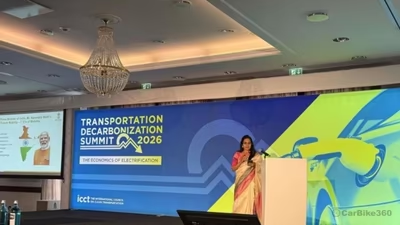
NITI Aayog showcases India electric mobility vision at Berlin summit
VinFast elected Shalabh Rajvanshi as Deputy CEO for India two-wheeler operations

Motovolt Mobility and GBG EV partner to electrify last‑mile deliveries in Delhi NCR

SMK Helmets partners with Kavin Quintal for 2026 International Racing Season
Listen to Bike Audios