ELECTRIC
Maruti Suzuki climbs to fourth position in the India EV market
 Add CarBike360 on Google
Maruti Suzuki’s entry into the EV space is gaining momentum as it captures a top-four position in India’s fast-growing electric vehicle market. The development highlights shifting dynamics and increased competition among automakers.

Jun 02, 2026 11:42 am IST
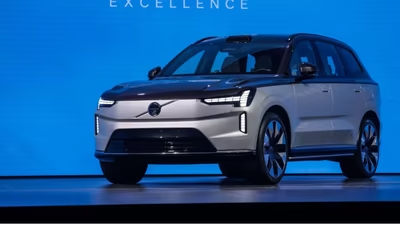
Maruti Suzuki has become India's fourth-largest electric passenger vehicle brand by sales, less than four months after starting eVitara deliveries. The company surpassed Hyundai, BYD, Kia, and VinFast in the electric vehicle (EV) segment this year.
Key Highlights
- Maruti Suzuki sold 4,365 EVs in India from January to May 2026
- The eVitara helped Maruti Suzuki surpass Hyundai, BYD, Kia, and VinFast in EV sales
- Maruti Suzuki has shipped over 35,000 eVitara units to 46 countries since September 2025
- The company aims for 100,000 charging points in India by 2030
Maruti Suzuki’s EV Sales Performance
Industry data shows Maruti Suzuki sold 4,365 EVs between January and May 2026. This figure allowed the company to surpass VinFast, which sold 4,133 units in the same period. Maruti Suzuki also outperformed BYD, Hyundai, and Kia in EV sales volume.
Tata Motors and Mahindra continue to lead the Indian EV market, while JSW MG Motor holds third place. Maruti Suzuki currently offers only one EV in India, the Maruti eVitara. In contrast, Hyundai sells the Creta Electric and Ioniq 5, and VinFast offers three EV models. Tata Motors and Mahindra have larger EV portfolios.
Despite entering the EV market later than other major manufacturers, Maruti Suzuki quickly established a presence. From January to May 2026, Maruti averaged 873 EV units sold per month. This monthly average exceeded VinFast (827), Hyundai (583), BYD (488), and Kia (405).
Market Factors and Competitive Position
Maruti Suzuki’s brand presence, extensive sales and service network, and competitive pricing have supported the eVitara's success. Among midsize electric SUVs, the eVitara is priced below rivals such as the VinFast VF6, MG ZS EV, Hyundai Creta Electric, and Mahindra BE 6 at the entry level. Only the MG Windsor EV offers a lower starting price in this segment.
Demand for electric passenger vehicles in India is rising. EV registrations increased 77 percent year on year to 52,274 units during April and May. EV market penetration reached 6.4 percent in May. Factors such as higher fuel costs, improved charging infrastructure, and a wider range of electric models have contributed to this growth.
Exports and Future Plans
Maruti Suzuki has made India a key export base for the eVitara. Since exports began in September 2025, the company has shipped over 35,000 units to 46 countries. The eVitara is now Maruti’s third-largest export model, after the Fronx and the Jimny.
Maruti Suzuki also produces a rebadged version of the eVitara for Toyota, sold as the Urban Cruiser eBella. Bookings for the eVitara have crossed 4,000 units in the past month. However, supply remains limited by production capacity. The company expects to increase output from August or September. Until then, monthly production will stay at about 2,000 units.
As part of its EV strategy, Maruti Suzuki aims to establish 100,000 public and private charging points by 2030. The company has partnered with 13 charge-point operators and has installed more than 2,000 charging points in 1,100 cities. Maruti Suzuki also offers Battery-as-a-Service, subscription plans, and an assured buyback program for eVitara buyers.
Also Read: Rising fuel prices boost demand for Maruti eVitara and CNG cars
CarBike 360 Says
Maruti Suzuki’s rise to the fourth position in India’s EV market marks a significant shift in its strategy and reinforces its intent to stay competitive in a rapidly evolving segment. With growing consumer interest and upcoming product launches, the brand appears well-positioned to strengthen its foothold and play a larger role in shaping India’s electric mobility future.


You May Like


Find your perfect car

Budget

Brand

Body Type

Fuel

Mileage

More
Latest Car Videos



Other Car News
Listen to Car Audios