Ad
Ad
Chandrayaan 3 | India's Historic Moon Landing


Cost of making Chandrayaan 3 and know about the whole project of India's historic moon landing.
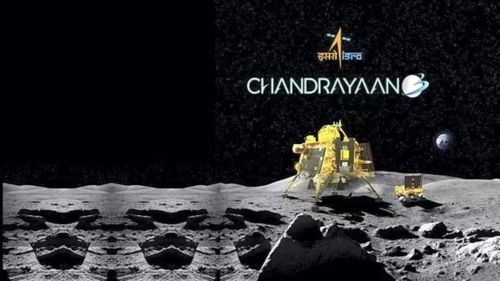
Know everything about Chandrayaan 3 moon landing
India has achieved a historic milestone in its space exploration program by successfully landing its third lunar mission, Chandrayaan-3, on the Moon's surface on August 23, 2023. The mission, which consisted of a lander and a rover, touched down near the lunar south pole at 2:18 pm IST, after a challenging descent maneuver that lasted about 15 minutes.
The lander, named Vikram after the father of India's space program, Dr Vikram Sarabhai, and the rover, named Pragyan, meaning wisdom in Sanskrit, are expected to operate for at least one lunar day (14 Earth days) and conduct various scientific experiments. The main objectives of the mission are to study the lunar topography, mineralogy, elemental abundance, lunar exosphere and signatures of hydroxyl and water ice.
The landing was witnessed by millions of people across India and the world, who watched the live broadcast of the event by the Indian Space Research Organisation (ISRO). Prime Minister Narendra Modi congratulated the ISRO team and the nation for the historic achievement, calling it a proud moment for India and a testament to its scientific prowess and determination.
"Today, India has once again shown that it is a leader in space exploration. Chandrayaan-3 is not just a mission, but a message to the world that nothing is impossible for us. We have overcome many challenges and obstacles to reach this point. I salute the ISRO team and all the scientists and engineers who have worked tirelessly for this mission. You have made India proud and inspired millions of young minds to dream big and pursue excellence," Modi said in his address to the nation.
ISRO Chairman Dr. K Sivan also expressed his joy and gratitude for the successful landing, saying that it was a result of hard work, dedication and teamwork of the entire ISRO family. He thanked the government, the industry partners and the public for their support and encouragement.
"Chandrayaan-3 is a very complex and ambitious mission, which required a lot of innovation and creativity. We had to overcome many technical challenges and learn from our previous experiences. We are very happy that we have achieved our goal of landing on the Moon and demonstrating our capabilities. This is a great achievement for ISRO and for India," Sivan said.
Ad
Ad
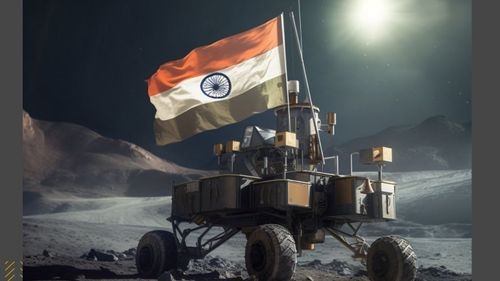
ISRO के मुताबिक, मिशन के 3 objectives हैं -
- Lunar surface पर safe and soft landing demonstrate
- Rover roving on the Moon demonstrate
- In-situ scientific experiments conducted
The Chandrayaan-3 mission was launched on June 14, 2023, from the Satish Dhawan Space Centre in Sriharikota, using a Geosynchronous Satellite Launch Vehicle Mark III (GSLV Mk III) rocket. The mission was originally planned to be launched in 2020 but was delayed due to the COVID-19 pandemic and some technical issues.
The mission is a follow-up to India's previous lunar missions, Chandrayaan-1 and Chandrayaan-2. Chandrayaan-1 was launched in 2008 and orbited the Moon for about a year, making several discoveries such as the presence of water molecules on the lunar surface. Chandrayaan-2 was launched in 2019 and consisted of an orbiter, a lander and a rover. However, the lander failed to soft-land on the Moon due to a loss of communication during the final descent phase.
Chandrayaan-3 is India's first successful soft landing on the Moon and the seventh country in the world to achieve this feat. The other countries that have landed on the Moon are the United States, Russia (formerly the Soviet Union), China, Japan, Israel and Germany (as part of an international consortium).
The Chandrayaan-3 mission is expected to provide valuable data and insights into the lunar environment and resources, which could pave the way for future human exploration and settlement of the Moon.
The Lunar South Pole region is a little-explored area that scientists believe could hold important reserves of water and other resources.
According to ISRO Chandrayaan-3 mission costs around $74.6 million which is much less than the other countries.
भारत का Chandrayaan-3 mission, चांद पर 'सॉफ्ट-लैंडिंग' करने वाला चौथा देश है, और पहला देश है जो lunar south pole पर 'सॉफ्ट-लैंडिंग' कारी है।
Chandrayaan-3 mission के साथ, ISRO की space engineering में एक महत्वपूर्ण प्रगति हुई है, और ISRO को world space community में respect मिली है।
Chandrayaan-3 mission के success से, India को space exploration में एक leader माना जाएगा, और India को space science and technology में self-reliant होने में help मिलेगी।
Tyres of rover Chandrayaan 3
Tyre marks of Chandrayaan 3 on the moon

What is Chandrayaan-3?
Chandrayaan-3, which means "mooncraft" in Sanskrit, is India's third lunar exploration mission, following Chandrayaan-1 in 2008 and Chandrayaan-2 in 2019. The mission consists of an orbiter, a lander named Vikram, and a rover named Pragyan. The orbiter was launched on July 14, 2023, from the Satish Dhawan Space Centre in Sriharikota, using a Geosynchronous Satellite Launch Vehicle Mark III (GSLV Mk III) rocket. The orbiter carried the lander and the rover to the lunar orbit, where they separated on August 22, 2023.
The main objectives of Chandrayaan-3 are to demonstrate a safe and soft landing on the lunar surface, to operate a rover on the Moon, and to conduct scientific experiments using various instruments. The mission also aims to study the lunar topography, mineralogy, elemental abundance, surface chemical composition, thermo-physical characteristics, and solar wind interactions.
Why is the South Pole important?
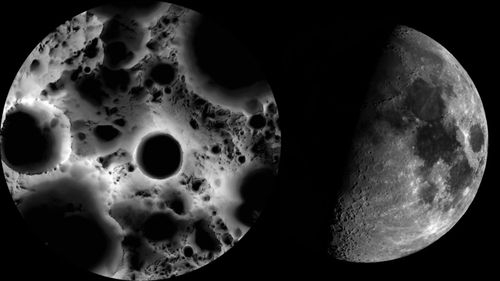
The south pole of the Moon is a region of great scientific interest and potential for future exploration. Unlike the equatorial regions of the Moon, where most of the previous landings have occurred, the South Pole has areas that are permanently shadowed by craters and mountains, creating extremely cold conditions. These areas may contain water ice and other volatile substances that could be useful for future human settlements or fuel production.
The south pole also has areas that receive sunlight for most of the lunar day, which lasts for about 14 Earth days. These areas could provide solar power and communication opportunities for lunar missions. Moreover, the South Pole offers a unique perspective of the Earth and other celestial bodies, as well as a rich diversity of geological features.
How did the landing happen?
The powered descent of Vikram began on August 23, 2023, at around 6 pm Indian Standard Time (IST), after it performed a series of orbital manoeuvres to align itself with the landing site. The landing site was located near the crater Manzinus C, at about 70 degrees south latitude and 23 degrees east longitude. The landing sequence involved four phases: rough braking, attitude control, fine braking, and terminal descent.
During the rough braking phase, Vikram fired its four throttleable engines to reduce its velocity from about 1.6 km/s to about 400 m/s. This phase lasted for about 10 minutes and covered a distance of about 30 km. During the attitude control phase, Vikram oriented itself to face the landing site and performed a small horizontal maneuver to avoid any obstacles. This phase lasted for about 38 seconds and covered a distance of about 7.4 km.
During the fine braking phase, Vikram further reduced its velocity to about 60 m/s and descended to an altitude of about 400 m. This phase lasted for about 13 minutes and covered a distance of about 13 km. During the terminal descent phase, Vikram used its sensors to identify a safe landing spot and hovered over it for about 15 seconds. It then cut off its engines and touched down softly on the lunar surface at around 6:04 pm IST. The entire landing sequence was autonomous and controlled by an onboard computer.
What happened after the landing?
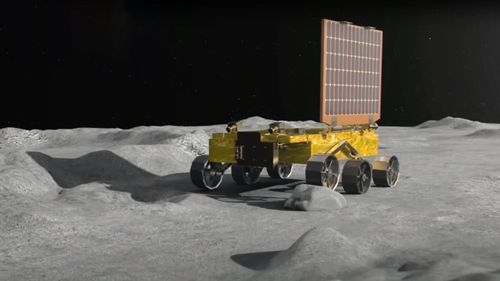
After confirming the successful landing, Vikram deployed its solar panels and antennas and established communication with the orbiter and the ground station. It also sent back images of its surroundings and its own shadow on the Moon. About four hours after the landing, Vikram deployed its ramp and released Pragyan, which rolled out onto the lunar terrain.
Pragyan is a six-wheeled rover that weighs about 27 kg and can travel up to 500 m from Vikram. It is powered by solar energy and can communicate with Vikram using radio signals. Pragyan carries two cameras and three scientific instruments: an alpha particle X-ray spectrometer (APXS) to measure the elemental composition of rocks and soil; a laser-induced breakdown spectroscope (LIBS) to measure the mineralogy of rocks and soil; and a laser retroreflector array (LRA) to reflect laser beams from orbiting spacecraft or Earth-based observatories.
Pragyan began its exploration by taking images of Vikram and the landing site. It then moved towards a nearby crater and started to analyze its samples using its instruments. Pragyan is expected to operate for at least one lunar day, or 14 Earth days, while Vikram is expected to operate for at least one lunar year, or 12 Earth months. The orbiter, which has eight scientific instruments, will continue to orbit the Moon for at least two years and relay data from Vikram and Pragyan to Earth.
What are the implications of the mission?
Chandrayaan-3 is a milestone for India's space programme, as it showcases its technological capabilities and scientific ambitions. It also marks India's entry into an elite club of nations that have achieved a soft landing on the Moon, joining the US, the former Soviet Union, and China. Moreover, it is the first mission to land on the lunar south pole, opening up new possibilities for lunar exploration and utilization.
Chandrayaan-3 is also a significant contribution to global lunar science, as it provides valuable data and insights into a largely unexplored region of the Moon. The mission could help answer some fundamental questions about the origin and evolution of the Moon, as well as its potential for supporting human activities in the future. Chandrayaan-3 is also a demonstration of international cooperation, as it involves collaboration with several countries and organizations, such as NASA, ESA, JAXA, CNES, ROSCOSMOS, and others.
Chandrayaan-3 is a proud moment for India and a source of inspiration for the world. It is a testament to the vision and dedication of ISRO and its scientists, engineers, and technicians. It is also a reflection of the aspirations and dreams of millions of Indians who have supported and celebrated this mission. Chandrayaan-3 is not just a mooncraft, but a symbol of India's spirit of exploration and discovery.
Follow Us:




More News

Kia India Unleashes 'Inspiring December' Sales Campaign with Benefits Up to Rs 3.65 Lakh
Kia India unleashes 'Inspiring December' with benefits up to Rs 3.65 lakh on top models like Seltos and Sonet. Perfect for year-end upgrades with cash, exchange, and loyalty deals.
17-Dec-2025 11:45 AM
Read Full NewsKia India Unleashes 'Inspiring December' Sales Campaign with Benefits Up to Rs 3.65 Lakh
Kia India unleashes 'Inspiring December' with benefits up to Rs 3.65 lakh on top models like Seltos and Sonet. Perfect for year-end upgrades with cash, exchange, and loyalty deals.
17-Dec-2025 11:45 AM
Read Full News
Citroen India Has Achieved A Threefold Increase in Sales in Q4 of 2025
Citroën India's Q4 2025 sales tripled vs. Q3, fueled by innovative models and strategic shifts. A game-changer in the competitive auto market.
17-Dec-2025 10:27 AM
Read Full NewsCitroen India Has Achieved A Threefold Increase in Sales in Q4 of 2025
Citroën India's Q4 2025 sales tripled vs. Q3, fueled by innovative models and strategic shifts. A game-changer in the competitive auto market.
17-Dec-2025 10:27 AM
Read Full News
Bajaj Pulsar 220F Launched in India at Rs 1.28 Lakh, Check What's New
The Bajaj Pulsar 220F makes a return with subtle yet meaningful updates. Discover what’s changed and why this iconic motorcycle still matters in today’s market.
17-Dec-2025 07:22 AM
Read Full NewsBajaj Pulsar 220F Launched in India at Rs 1.28 Lakh, Check What's New
The Bajaj Pulsar 220F makes a return with subtle yet meaningful updates. Discover what’s changed and why this iconic motorcycle still matters in today’s market.
17-Dec-2025 07:22 AM
Read Full News
Honda Transalp XL750 Special Edition Unveiled Globally
Honda's XL750 Transalp SP Special Edition blends 1980s-inspired vinyl graphics, gold rims, and premium guards with an unchanged 91 HP of performance.
16-Dec-2025 12:32 PM
Read Full NewsHonda Transalp XL750 Special Edition Unveiled Globally
Honda's XL750 Transalp SP Special Edition blends 1980s-inspired vinyl graphics, gold rims, and premium guards with an unchanged 91 HP of performance.
16-Dec-2025 12:32 PM
Read Full News
2025 Tata Sierra Bookings Now Available: Here’s Everything You Need To Know About The Booking Process
Tata Sierra bookings opened December 16, 2025, starting at Rs 11.49 lakh ex-showroom. Reserve for Rs 21,000 online or at dealerships, with deliveries from January 15, 2026.
16-Dec-2025 10:06 AM
Read Full News2025 Tata Sierra Bookings Now Available: Here’s Everything You Need To Know About The Booking Process
Tata Sierra bookings opened December 16, 2025, starting at Rs 11.49 lakh ex-showroom. Reserve for Rs 21,000 online or at dealerships, with deliveries from January 15, 2026.
16-Dec-2025 10:06 AM
Read Full News
BMW Confirms New 450cc Twin Platform to Replace 310 Series, Multiple Models Planned
BMW is set to retire its 310 series and introduce a new 450cc twin-cylinder platform, starting with the F 450 GS and expanding into multiple body styles.
16-Dec-2025 07:13 AM
Read Full NewsBMW Confirms New 450cc Twin Platform to Replace 310 Series, Multiple Models Planned
BMW is set to retire its 310 series and introduce a new 450cc twin-cylinder platform, starting with the F 450 GS and expanding into multiple body styles.
16-Dec-2025 07:13 AM
Read Full NewsAd
Ad






Cars In India

MG Hector Plus
₹ 17.29 - 19.49 Lakh

MINI Cooper S Convertible
₹ 58.50 Lakh

Mahindra XEV 9S
₹ 19.95 - 29.45 Lakh

Tata Sierra
₹ 11.49 - 21.29 Lakh

Porsche Cayenne EV
₹ 1.76 - 2.26 Cr

Kia New Seltos
₹ 10.99 - 20.80 Lakh

Mahindra 7XO
₹ 14.00 - 26.00 Lakh

Maruti e Vitara
₹ 20.00 - 25.00 Lakh

Hyundai Ioniq 5 Facelift
₹ 36.37 - 46.36 Lakh

Renault New Duster
₹ 10.00 - 18.00 Lakh
Ad
Ad
Ad